

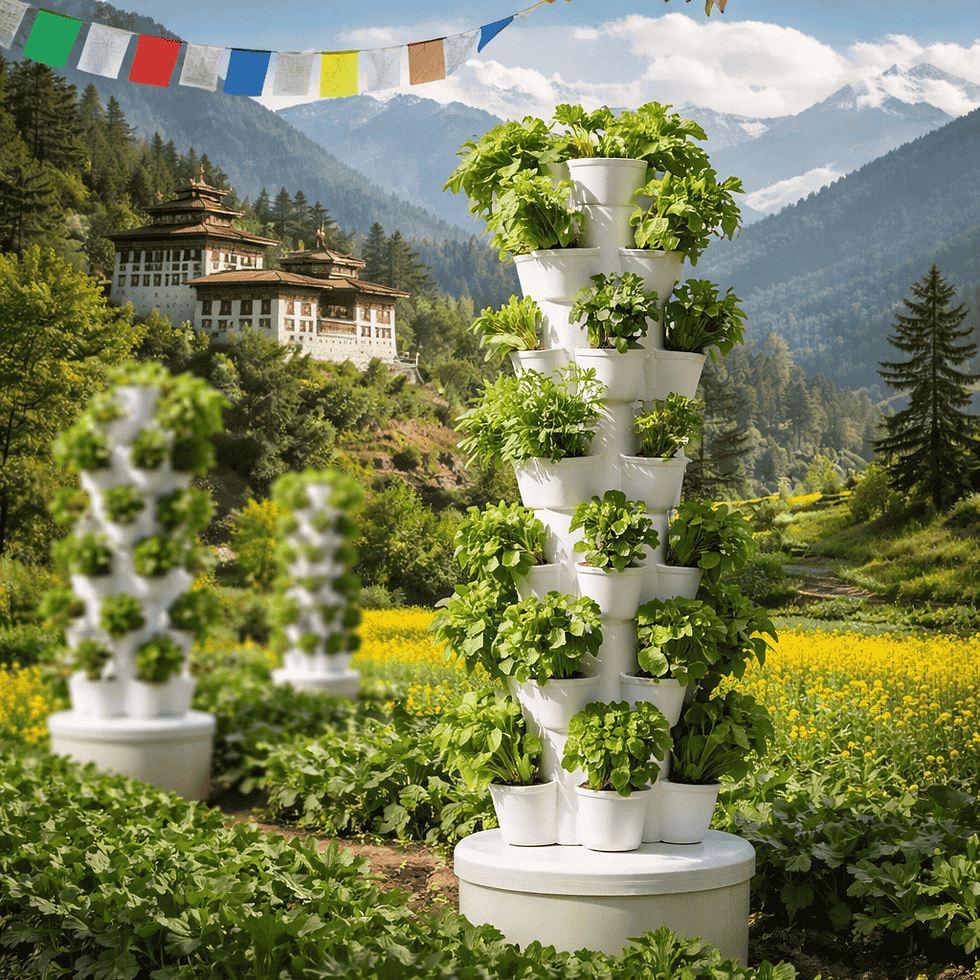
Aeroponic Towers for Bhutan | Soil-Free Indoor & Vertical Farming Solutions
High-quality aeroponic tower systems designed for sustainable food production in Bhutan. These soil-free, water-efficient towers enable clean indoor and outdoor cultivation of vegetables, herbs, and leafy greens using nutrient mist technology. Ideal for homes, schools, institutions, and urban environments, the systems support year-round growing with minimal water usage, compact space requirements, and low maintenance. Built for reliability, easy installation, and export readiness, aeroponic towers offer a practical solution for modern, environmentally responsible food cultivation in Bhutan.




Why Choose Aeroponic Towers?
Skip store-bought greens and grow fresh, pesticide-free vegetables and herbs at home with Phooldaan’s aeroponic towers. Designed for indoor spaces, balconies, kitchens, and rooftops, these vertical farming systems deliver high yields using no soil, minimal water, and zero mess—even in the smallest spaces

Faster Growth & Bigger Harvests
By feeding nutrients directly to plant roots, aeroponic towers accelerate growth cycles and boost plant health, giving you harvest-ready greens faster than soil gardening.
Ultra-Water Efficient
These towers use mist-based nutrient delivery, making water usage dramatically lower than soil or traditional hydroponics — perfect for urban homes with water constraints.
Space-Saving Vertical Design
Grow up instead of out. Aeroponic towers stack multiple plant points vertically, so even small balconies and kitchen corners become productive gardens without clutter.
Clean & Soil-Free
No soil means no mess, no pests, and no harmful run-off — just clean, fresh produce harvested straight from your tower.
Minimal Daily Care
Automated misting and low-maintenance design means you spend less time tending plants and more time enjoying your harvest.

How Aeroponic Towers Work
Aeroponic towers are the ultimate solution for people who want real food at home without traditional soil gardening hassles. Compared to conventional farming and pot gardening, aeroponic towers deliver nutrients directly to plant roots using a fine mist.

Seed or seedling establishment
Begin with seeds or young plants placed in grow ports.

Tower ecosystem
Nutrient-rich mist feeds plant roots suspended inside the vertical tower.

Faster growth
Oxygen and nutrients meet roots efficiently, boosting growth cycles.

Harvest fresh produce
Enjoy leafy greens and herbs right from your home — no soil, pesticides, or heavy watering.

Benefits You'll See with an Aeroponics Tower
Freshness Redefined
Grow your own garden-fresh lettuce, spinach, herbs, and more with peak nutrition and flavour, every day.
Healthier Lifestyle
Homegrown greens are naturally rich in vitamins and minerals — no pesticides, no uncertainty, just real food from your space.
Continuous Harvest
With proper setup and rotation, aeroponic towers can deliver continuous harvests throughout the year
Minimal Setup and Cleanup
Soil-free systems mean easy setup, less debris, and a cleaner home gardening experience.
Where to Place Your Aeroponic Tower
Balconies & Terraces
Best natural light and air exposure

Indoor Spaces
Place near windows or add grow lights for year-round growth.

Kitchen Corners
Fresh herbs literally at your fingertips
.

Rooftop and Greenhouses
High capacity and free sunlight exposure.

Efficient aeroponic systems are designed to optimise both water and electricity usage. Systems with advanced misting technology ensure minimal water waste and lower operational costs, making them suitable for year-round growing.
Crop selection also plays a key role in system performance:
-
Leafy greens and herbs grow well in all aeroponic systems
-
Fruiting plants such as chillies and tomatoes require larger systems like Orbit 36 or Nova 80
-
Microgreens thrive in compact towers like Lotus 30

SHOP AEROPONICS TOWERS ONLINE ON PHOOLDAAN
Discover Phooldaan’s curated collection of aeroponic and vertical hydroponic systems designed for modern indoor farming. Whether you are a beginner or an experienced grower, our range offers reliable, efficient, and space-saving solutions at competitive prices.
Aeroponic Tower Exports from India to Bhutan – Advancing Soil-Free Farming in the Himalayas
Indoor Vertical Farming | Year-Round Growing | Best Prices
Aeroponic tower exports from India to Bhutan are gaining momentum as Bhutan looks for water-efficient, space-saving, and climate-resilient farming solutions. With limited arable land, hilly terrain, and a strong national focus on sustainability and organic practices, aeroponic towers are a natural fit for Bhutan’s agricultural future.
Phooldaan aeroponic towers are designed for easy export, simple installation, and reliable performance in hill regions—making them ideal for Bhutanese homes, communities, monasteries, and small farms.
What Is an Aeroponic Tower for Bhutan?
An aeroponic tower is a vertical, soil-free farming system where plants grow with their roots suspended in air and fed through a fine mist of water and nutrients. No soil is required, and nutrients are delivered directly to the root zone.
This method:
-
Saves up to 90% water
-
Improves oxygen availability to roots
-
Enables faster and cleaner plant growth
-
Works efficiently on small land parcels
For Bhutan, where land is often sloped and water conservation is essential, aeroponic towers provide a practical and scalable solution.
Mist-Based Root Feeding System
A submersible pump sprays nutrient mist at regular intervals.
Roots absorb both nutrients and oxygen efficiently, while unused solution drains back into the tank.
This closed-loop system:
-
Minimises water waste
-
Prevents nutrient runoff
-
Keeps the system clean and environmentally friendly
Designed for Bhutan’s Terrain
Traditional soil farming can be challenging on steep hills and terraces. Aeroponic towers:
-
Grow vertically instead of horizontally
-
Fit easily on terraces, balconies, and rooftops
-
Require minimal ground preparation
-
Are easy to transport and assemble after import
Why Export Aeroponic Towers from India to Bhutan?
Water-Smart Farming for Hill Regions
Bhutan’s higher altitudes and seasonal dry periods make water efficiency critical. Aeroponic towers use misting instead of flooding or drip irrigation, allowing farms to operate longer with limited water availability.
Alignment with Bhutan’s Organic Vision
Bhutan is globally recognised for its commitment to organic and sustainable agriculture. Aeroponic towers support this vision by enabling:
-
Soil-free cultivation
-
Reduced pest pressure
-
Minimal chemical intervention
-
Cleaner, more consistent produce
This makes aeroponic farming compatible with organic practices and premium local markets.
Smooth Trade Between Neighbouring Countries
India and Bhutan share a strong trade relationship. Aeroponic towers exported from India benefit from:
-
Short transit times
-
Lower shipping costs
-
Simplified cross-border logistics
-
Reliable packaging and documentation
This enables quick deployment in Bhutanese regions such as Thimphu, Paro, Punakha, and nearby valleys.
Higher Yield in Limited Space
Vertical growing allows more plants per square metre compared to soil farming.
Leafy greens and herbs can be harvested frequently, improving food availability and household or community income.
Year-Round Growing Possibility
With optional grow lights, aeroponic towers can operate indoors during cold seasons or snowfall. This ensures:
-
Stable food supply
-
Reduced dependence on imports
-
Greater food security in winter months
How Aeroponic Towers Work in Bhutanese Farms
Aeroponic towers are shipped as complete kits and assembled locally.
Basic setup includes:
-
Tower sections
-
Water tank
-
Pump and timer
-
Nutrient solution
Once assembled, the system runs automatically with minimal daily intervention.
Pump and Mist Cycle Operation
-
The pump sprays nutrient mist for a short interval
-
Roots absorb moisture and nutrients
-
The system pauses, allowing roots to breathe
-
Excess solution returns to the tank
This cycle repeats throughout the day, ensuring consistent growth while protecting Bhutan’s water resources.
Oxygen-Rich Root Environment
Roots remain exposed to air most of the time, which increases oxygen availability.
Higher oxygen levels improve nutrient uptake and help plants grow stronger, even in cooler climates.
As a result, yields can significantly exceed traditional soil farming in similar conditions.
Phooldaan Aeroponic Towers for Bhutan Export
Phooldaan designs aeroponic towers that are lightweight, durable, and suited for hill climates.
Nova 20 – Compact Home and Terrace System
-
Supports up to 20 plants
-
Lightweight and easy to transport
-
Ideal for homes, monasteries, and small terraces
-
Suitable for herbs and leafy greens
Lotus 30 and Nova 35 – Medium-Scale Options
-
Lotus 30 supports up to 30 plants for higher yield
-
Nova 35 includes grow lights for indoor and low-sun areas
-
Suitable for apartments, community kitchens, and indoor farms
Lotus 60 – Community and Small Farm System
-
Supports up to 60 plants
-
Larger nutrient tank for longer run time
-
Ideal for community farms, schools, and cooperatives
-
Export-ready kit with all required components
Significant Water Savings
Up to 90% less water usage helps protect rivers and local water sources while maintaining reliable crop production.
Efficient Use of Steep Land
Vertical systems allow farming in places where traditional plots are not practical.
Lower Long-Term Costs
-
No soil input
-
Low electricity usage
-
Reduced dependency on imported vegetables
-
Affordable maintenance
Easier Organic Certification
Soil-free systems reduce contamination risks.
Documentation and compliance for organic or clean-food labelling becomes simpler, supporting premium pricing in local markets.
Setting Up an Aeroponic Tower in Bhutan
Step 1: Site Selection
-
Choose a level terrace, balcony, or indoor area
-
Ensure good airflow
-
Use grow lights if natural sunlight is limited
Step 2: Nutrient Preparation
-
Fill the tank with clean local water
-
Add nutrient solution gradually
-
Maintain pH around 5.8 for optimal growth
Step 3: Planting
-
Place seeds or seedlings in net pots
-
Insert pots into the tower
-
Start misting cycle and monitor initial growth
Roots typically appear within a week, and harvesting begins shortly after.
Urban Homes and Balconies (Thimphu)
Compact towers fit well in city homes with wind protection and wall support.
Valley Farms (Paro and Punakha)
Terrace installations benefit from moderate climate and clean water sources.
Indoor Kitchens and Monasteries
Grow lights enable clean, quiet indoor food production for daily use.
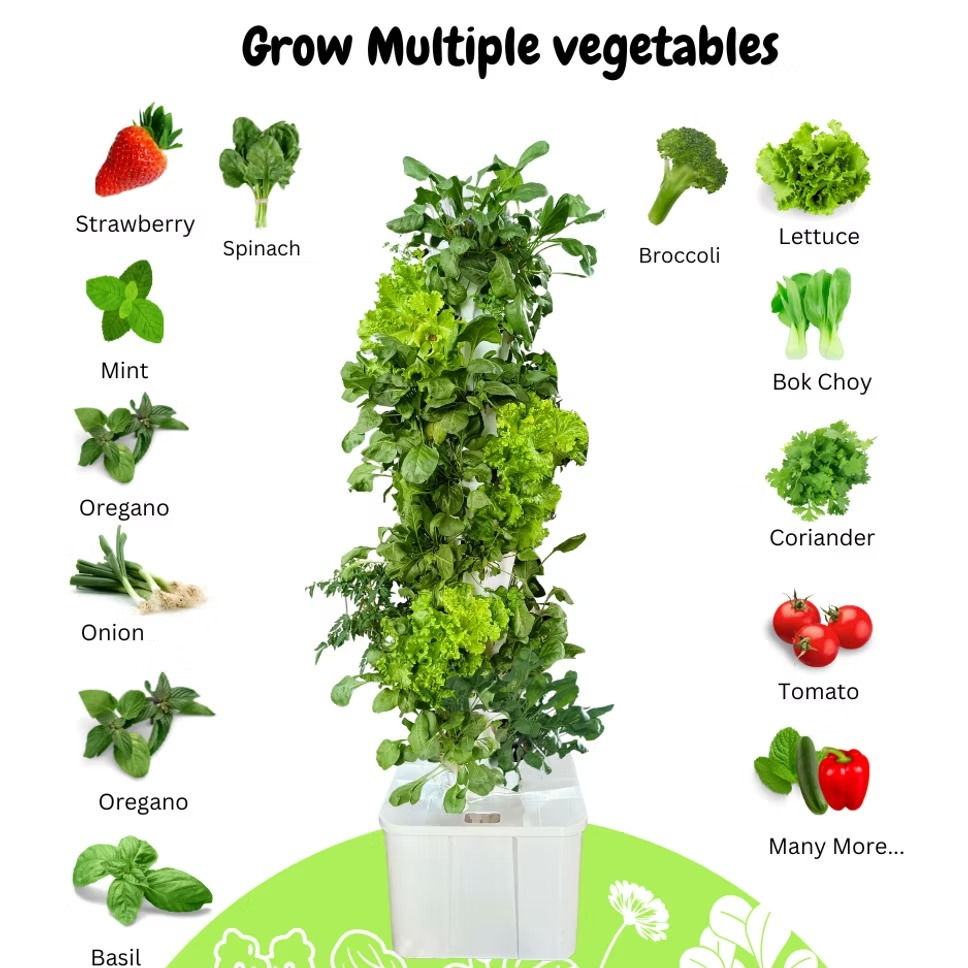
Leafy Greens
-
Lettuce
-
Spinach
Herbs
-
Mint
-
Basil
-
Coriander
High-Value Crops
-
Microgreens for fast turnover
-
Strawberries in larger towers
Cold Weather Management
-
Protect tanks from freezing
-
Use grow lights for warmth
-
Keep pumps sheltered
Nutrient Adjustment
-
Reduce nutrient strength during colder months
-
Monitor TDS and pH regularly
Monsoon Precautions
-
Ensure stable placement
-
Provide partial shade if rainfall is excessive
-
Durable, UV-resistant materials suitable for cold climates
-
Food-grade construction for safe consumption
-
Export-ready packaging
-
Simple installation and maintenance
-
Training guides and remote support
-
Reliable spare parts availability
Phooldaan supports scalable deployment—from single homes to community farms—helping Bhutan move closer to a sustainable, self-reliant food system.
Frequently Asked Questions (FAQ)
-
Q1: Which aeroponic tower is best for Bhutan homes?
Nova 20 is ideal for compact terraces and balconies. -
Q2: How much water does an aeroponic tower save?
Up to 90% compared to traditional soil farming. -
Q3: Can aeroponic towers be used indoors in Bhutan?
Yes, models with grow lights work well in indoor kitchens and cold climates. -
Q4: How long does shipping from India to Bhutan take?
Typically around one week, depending on location. -
Q5: What is the cost of running an aeroponic tower in Bhutan?
Running costs are low due to minimal power and water use. -
Q6: Are aeroponic towers suitable for organic farming?
Yes, soil-free growing simplifies clean and organic production. -
Q7: Can aeroponic towers handle cold weather?
With basic protection and lights, growth remains stable even in winter. -
Q8: Which crops perform best in Bhutan’s climate?
Herbs, leafy greens, microgreens, and strawberries perform well. -
Q9: Is setup support available?
Yes, setup guides and remote assistance are provided. -
Q10: Are spare parts easily available?
Yes, pumps, nozzles, and accessories can be shipped quickly from India.