


Beginner Friendly with Easy Setup
Pan India Fast and Assured Delivery
Grow Fresh Pesticide-Free Produce Year Round
Two-Year Warranty for Peace of Mind
Which Aeroponic Tower is Right For You?

NOVA 20
Best for First-Time Grower, Balconies & Small Families
20 Plant Capacity
15L Tank
3.5ft Tower Height
12" Base Diameter
2 year Tower Warranty

40 Plant Capacity
20L Tank
5.5ft Tower Height
1ft Base Diameter
2 year Tower Warranty
40 Plant Capacity
60L Tank
5.5ft Tower Height
1ft Base Diameter
2 year Tower Warranty

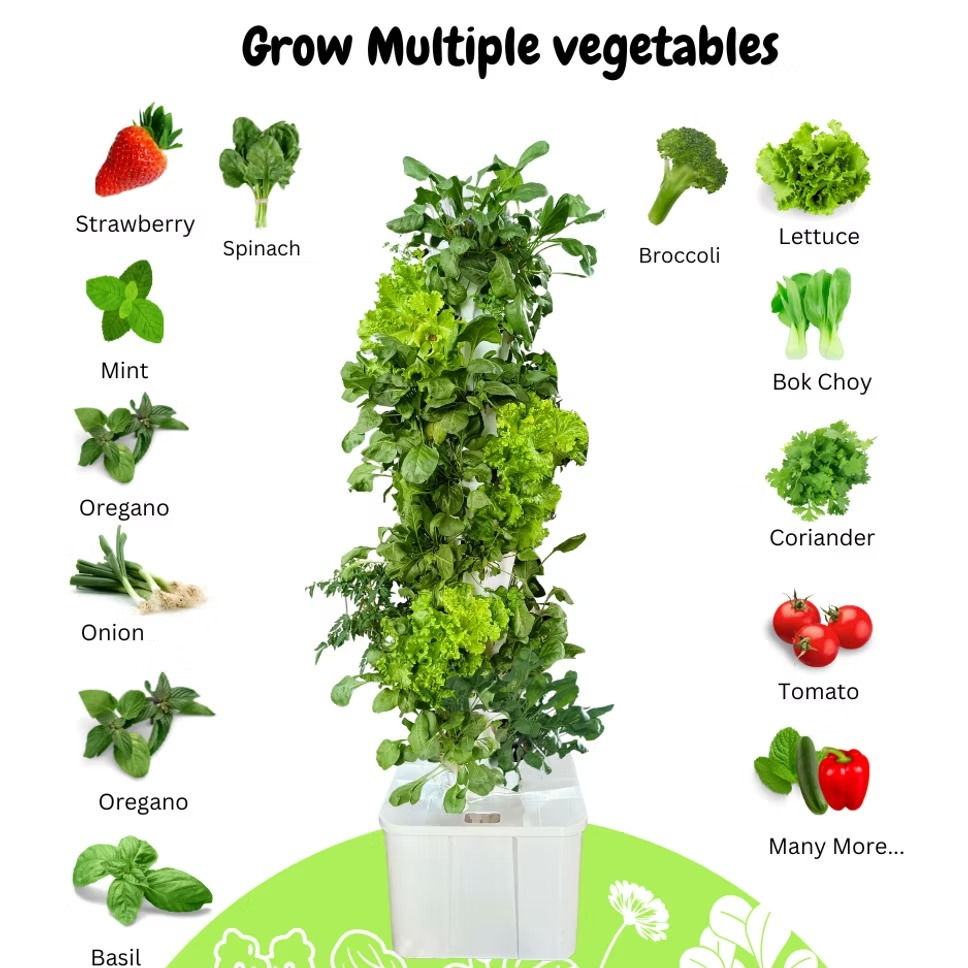
What Can You Grow in an Indoor Aeroponic Tower?

Time: 30-40 Days
Difficulty: Easy
Lettuce

Time: 25-35 Days
Difficulty: Easy
Spinach

Time: 30-45 Days
Difficulty: Easy
Basil

Time: 25-40 Days
Difficulty: Easy
Coriander

Time: 20-30 Days
Difficulty: Very Easy
Mint

Time: 35-45 Days
Difficulty: Medium
Kale

Time: 60-90 Days
Difficulty: Medium
Cherry Tomato

Time: 60-120 Days
Difficulty: Advanced
Strawberry
Buy Aeroponic Towers for Home and Indoor Online from Phooldaan




Why Choose Phooldaan Aeroponic Towers?
Skip store-bought greens and grow fresh, pesticide-free vegetables and herbs at home with Phooldaan’s aeroponic towers. Designed for indoor spaces, balconies, kitchens, and rooftops, these vertical farming systems deliver high yields using no soil, minimal water, and zero mess—even in the smallest spaces

Faster Growth & Bigger Harvests
By feeding nutrients directly to plant roots, aeroponic towers accelerate growth cycles and boost plant health, giving you harvest-ready greens faster than soil gardening.
Ultra-Water Efficient
These towers use mist-based nutrient delivery, making water usage dramatically lower than soil or traditional hydroponics — perfect for urban homes with water constraints.
Space-Saving Vertical Design
Grow up instead of out. Aeroponic towers stack multiple plant points vertically, so even small balconies and kitchen corners become productive gardens without clutter.
Clean & Soil-Free
No soil means no mess, no pests, and no harmful run-off — just clean, fresh produce harvested straight from your tower.
Minimal Daily Care
Automated misting and low-maintenance design means you spend less time tending plants and more time enjoying your harvest.

How Aeroponic Towers Work
Aeroponic towers are the ultimate solution for people who want real food at home without traditional soil gardening hassles. Compared to conventional farming and pot gardening, aeroponic towers deliver nutrients directly to plant roots using a fine mist.

Seed or seedling establishment
Begin with seeds or young plants placed in grow ports.

Tower ecosystem
Nutrient-rich mist feeds plant roots suspended inside the vertical tower.

Faster growth
Oxygen and nutrients meet roots efficiently, boosting growth cycles.

Harvest fresh produce
Enjoy leafy greens and herbs right from your home — no soil, pesticides, or heavy watering.

Benefits You'll See with an Aeroponics Tower
Freshness Redefined
Grow your own garden-fresh lettuce, spinach, herbs, and more with peak nutrition and flavour, every day.
Healthier Lifestyle
Homegrown greens are naturally rich in vitamins and minerals — no pesticides, no uncertainty, just real food from your space.
Continuous Harvest
With proper setup and rotation, aeroponic towers can deliver continuous harvests throughout the year
Minimal Setup and Cleanup
Soil-free systems mean easy setup, less debris, and a cleaner home gardening experience.
Where to Place Your Aeroponic Tower
Balconies & Terraces
Best natural light and air exposure

Indoor Spaces
Place near windows or add grow lights for year-round growth.

Kitchen Corners
Fresh herbs literally at your fingertips everytime

Rooftop and Greenhouses
High capacity and free sunlight exposure.

Efficient aeroponic systems are designed to optimise both water and electricity usage. Systems with advanced misting technology ensure minimal water waste and lower operational costs, making them suitable for year-round growing.
Crop selection also plays a key role in system performance:
-
Leafy greens and herbs grow well in all aeroponic systems
-
Fruiting plants such as chillies and tomatoes require larger systems like Orbit 36 or Nova 80
-
Microgreens thrive in compact towers like Lotus 30

SHOP AEROPONICS TOWERS ONLINE ON PHOOLDAAN
Discover Phooldaan’s curated collection of aeroponic and vertical hydroponic systems designed for modern indoor farming. Whether you are a beginner or an experienced grower, our range offers reliable, efficient, and space-saving solutions at competitive prices.
Aeroponic Towers for Home in India – Advanced Vertical Farming Solutions by Phooldaan
Aeroponic towers make it possible for urban households to grow fresh, clean food at home using minimal space, minimal water, and minimal daily effort. As Indian cities become denser and traditional gardening becomes harder to sustain, aeroponic towers are emerging as one of the most practical and future-ready solutions for home food cultivation.
This page is designed as a complete authority resource to help you understand what an aeroponic tower for home is, how it works, why it is especially suitable for Indian urban living, where it fits best inside homes, and what you can realistically grow using it. It also addresses common concerns around maintenance, safety, water usage, and long-term value — all within the context of Indian homes and conditions.
For readers who want to understand the broader concept of aeroponics before focusing specifically on tower systems, the foundational overview is available here.
What Is an Aeroponic Tower?
An aeroponic tower is a vertical, soil-free growing system in which plant roots hang inside a closed tower structure and are fed with a fine, nutrient-rich mist instead of soil. This method allows plants to grow without traditional growing media while receiving precise amounts of water, nutrients, and oxygen.
An aeroponic tower for home is specifically designed to be compact, stable, clean, and easy to maintain, making it suitable for apartments, balconies, kitchens, and indoor living spaces. By stacking plants vertically, the system maximises yield while occupying very little floor space.
Unlike soil gardening, where plant health depends heavily on soil quality and drainage, aeroponic towers deliver nutrients directly to the roots in a controlled environment. This leads to faster growth cycles, healthier plants, and more predictable harvests.
A deeper technical explanation of how aeroponic tower working actually happens inside the system is explained here
How an Aeroponic Tower for Home Works
Understanding how an aeroponic tower for home functions internally helps remove the fear that aeroponics is “too technical”.
Plant Placement and Root Structure
Seeds or seedlings are placed in small planting cups or ports arranged vertically along the height of the tower. These cups support the plant stem while allowing the roots to hang freely inside the tower’s hollow chamber.
Nutrient Misting System
At the base of the aeroponic tower is a water reservoir mixed with essential plant nutrients. A low-power pump circulates this nutrient solution through internal piping and converts it into a fine mist using specially designed nozzles.
Oxygen and Nutrient Balance
The mist is sprayed at timed intervals, bathing the suspended roots. Between misting cycles, roots are exposed to air, ensuring very high oxygen availability. This combination of oxygen and precise nutrients is what allows aeroponic plants to grow faster and stronger than soil-grown plants.
Harvesting
You harvest directly from the aeroponic tower for home by cutting leaves, herbs, or greens as needed. Many crops allow continuous harvesting without uprooting the plant.
This soil-free growing logic is explained in depth in the broader aeroponics guide
Why Choose an Aeroponic Tower for Home in India?
Indian urban households face a unique combination of constraints that traditional gardening struggles to address. Aeroponic towers in India solve many of these challenges directly.
Space-Saving Vertical Design
Most Indian homes lack horizontal gardening space. Aeroponic towers grow dozens of plants in the footprint of a single pot, making them ideal for:
-
Small balconies
-
Kitchen corners
-
Indoor living areas
-
Compact terraces
This vertical efficiency is one of the primary reasons indoor aeroponic towers are gaining popularity in apartments.
High Water Efficiency
Aeroponic towers use mist-based nutrient delivery in a closed-loop system. Water that is not absorbed by the roots is collected and reused, drastically reducing wastage.
Compared to traditional soil gardening, aeroponic towers can reduce water usage by up to 90%. This advantage is especially important in Indian cities facing water shortages and inconsistent supply
Faster Growth and Higher Yield
In aeroponic systems, roots receive:
This accelerates growth cycles and supports frequent harvesting when the system is managed properly. Many users experience noticeably faster growth compared to soil pots.
Low Daily Maintenance
Modern aeroponic towers are designed to run automatically. Once set up:
This makes aeroponic towers beginner-friendly and suitable for busy professionals and families.
Aeroponic towers make it possible for urban households to grow fresh, clean food at home using minimal space, minimal water, and minimal daily effort. As Indian cities become denser and traditional gardening becomes harder to sustain, aeroponic towers are emerging as one of the most practical and future-ready solutions for home food cultivation.
This page is designed as a complete authority resource to help you understand what an aeroponic tower for home is, how it works, why it is especially suitable for Indian urban living, where it fits best inside homes, and what you can realistically grow using it. It also addresses common concerns around maintenance, safety, water usage, and long-term value — all within the context of Indian homes and conditions.
For readers who want to understand the broader concept of aeroponics before focusing specifically on tower systems, the foundational overview is available here.
Best Places to Keep an Aeroponic Tower for Home
Placement plays a crucial role in long-term success. Fortunately, aeroponic towers are highly flexible.
Balconies and Terraces
Balconies are one of the most common locations for aeroponic towers. Even narrow balconies can accommodate a vertical system without obstructing movement. Terraces allow higher plant capacity when space permits
Aeroponic towers can be placed in living rooms, dining areas, or hallways that receive good indirect sunlight. In homes with limited natural light, LED grow lights can be used effectively
Rooftops and Semi-Covered Areas
Rooftops with partial cover provide excellent light exposure while protecting the system from harsh rain. This is ideal for larger towers and higher plant counts.
What You Can Grow in an Aeroponic Tower for Home
Aeroponic towers are optimised for specific crop categories rather than all plants.
Leafy Greens
Leafy greens thrive in aeroponic systems due to their fast growth cycles and shallow root structures. Common examples include:
-
Lettuce varieties
-
Spinach
-
Kale
-
Arugula
-
Mustard greens
A curated list of top-performing vegetables is available here
Herbs
Herbs grow vigorously in aeroponic towers and can be harvested repeatedly over long periods. Popular options include:
-
Basil
-
Mint
-
Coriander
-
Parsley
-
Oregano
Other Crops
With larger or more advanced aeroponic towers for home, it is also possible to grow:
-
Microgreens
-
Small chillies
-
Cherry tomatoes
-
Other compact fruiting plants
Key Benefits of Aeroponic Towers for Urban Lifestyles
Healthier Food at Home
Growing food in an aeroponic tower allows you to consume fresh, pesticide-free greens harvested at peak freshness rather than relying solely on store-bought produce.
Year-Round Harvests
With proper lighting and nutrient management, an aeroponic tower for home can provide continuous harvests across seasons, independent of outdoor weather.
Sustainable Living
Aeroponic towers support sustainability by:
-
Reducing water use
-
Eliminating soil degradation
-
Enabling hyper-local food production
This aligns strongly with eco-conscious urban lifestyles.
Easy to Learn and Use
Modern aeroponic systems are designed with simple setup processes, clear instructions, and minimal ongoing effort, making them accessible even for first-time growers.
Understanding Buyer Psychology Around Aeroponic Towers in India
Before purchasing an aeroponic tower for home, most Indian buyers follow a predictable mental journey. Understanding this psychology is critical because high-ranking pages don’t just explain what a product is — they resolve why people hesitate.
Fear 1: “Aeroponics seems too technical”
Many first-time buyers associate aeroponics with laboratories, commercial farms, or advanced engineering. Pumps, nutrients, and timers can sound intimidating.
Modern aeroponic towers are intentionally designed to hide this complexity. Once installed, the system operates automatically in the background, much like a water purifier or air purifier. The user experience focuses on planting and harvesting, not system management.
Practical reassurance and common troubleshooting scenarios are covered here
Fear 2: “I’ve failed at gardening before”
Many Indian households have tried soil gardening on balconies or terraces and failed due to:
-
Poor soil quality
-
Overwatering or underwatering
-
Pest infestations
-
Inconsistent time availability
These experiences create the belief that “plants don’t grow well in my home.”
Aeroponic towers remove the most common causes of failure:
-
No soil means no soil-borne pests
-
Automated misting eliminates watering mistakes
-
Controlled nutrient delivery improves consistency
This is why many beginners succeed with aeroponic systems even after failing at soil gardening
Fear 2: “I’ve failed at gardening before”
Many Indian households have tried soil gardening on balconies or terraces and failed due to:
-
Poor soil quality
-
Overwatering or underwatering
-
Pest infestations
-
Inconsistent time availability
These experiences create the belief that “plants don’t grow well in my home.”
Aeroponic towers remove the most common causes of failure:
-
No soil means no soil-borne pests
-
Automated misting eliminates watering mistakes
-
Controlled nutrient delivery improves consistency
This is why many beginners succeed with aeroponic systems even after failing at soil gardening. Learn more here.
Fear 3: “Is an aeroponic tower worth the price?”
At first glance, aeroponic tower price may seem higher than pots or grow bags. However, this comparison is misleading.
Pots and soil are consumables. Aeroponic towers are durable systems designed for multi-year use. Over time, they reduce:
-
Grocery spending on greens and herbs
-
Repeated purchases of soil and pesticides
-
Replacement costs of failed plants
A structured evaluation of value, features, and long-term cost is available here
Aeroponic Tower Models and Capacity Options for Home Use
Different households have different consumption patterns, space availability, and goals. Aeroponic towers are therefore available in multiple capacities.
Compact Aeroponic Towers (Entry-Level)
Smaller systems are ideal for:
-
First-time users
-
Apartments with limited space
-
Herb- and salad-focused households
Examples include Nova 20 and Lotus 30. These towers allow users to learn aeroponics while still enjoying meaningful harvests.
Mid-Capacity Aeroponic Towers (Family Use)
For families that cook regularly and consume greens frequently, mid-sized towers offer a balance between output and footprint.
Popular options include:
These towers are commonly placed on balconies or in well-lit indoor spaces.
High-Capacity Aeroponic Towers (Advanced & Terrace Use)
Larger families, terrace gardeners, and advanced users often choose high-capacity systems such as Nova 120. These systems can significantly supplement household vegetable consumption when managed well.
Aeroponic Tower Kits and Portability
For users who prefer a bundled setup, aeroponic tower kits provide a ready-to-use solution that includes essential components required to get started.
Aeroponic towers are also:
-
Non-invasive
-
Portable
-
Suitable for rented homes
This flexibility makes them ideal for urban households that may relocate.
Maintenance Reality of Aeroponic Towers for Home
A major concern for buyers is ongoing maintenance.
Daily Maintenance
Minimal. Most users simply observe plant health and harvest as needed.
Weekly Maintenance
-
Check water level
-
Top up nutrients
-
Ensure pump operation
Periodic Maintenance
-
Light cleaning of components
-
Reservoir rinse
Compared to soil gardening, aeroponic towers require far less physical effort. There is no digging, no weeding, and no messy cleanup.
Power Cuts, Heat, and Indian Climate Conditions
Power Cuts
Short power outages are common in many parts of India. Aeroponic towers are resilient to brief interruptions because roots remain moist for extended periods. Once power returns, the system resumes automatically.
Heat and Humidity
With proper airflow, shade during peak summer, and adequate hydration, aeroponic towers perform well across Indian climates. Seasonal adaptability is discussed here
Power Cuts
Short power outages are common in many parts of India. Aeroponic towers are resilient to brief interruptions because roots remain moist for extended periods. Once power returns, the system resumes automatically.
Heat and Humidity
With proper airflow, shade during peak summer, and adequate hydration, aeroponic towers perform well across Indian climates. Seasonal adaptability is discussed here
Sustainability and Environmental Impact of Aeroponic Towers
Aeroponic towers align strongly with sustainable urban living.
They:
-
Use significantly less water
-
Reduce food transportation distances
This makes aeroponic towers a responsible choice for environmentally conscious households. Learn more here
Expanded Frequently Asked Questions About Aeroponic Towers for Home
1. What is an aeroponic tower for home?
It is a vertical, soil-free gardening system that grows plants using nutrient mist delivered directly to suspended roots.
2. Is an aeroponic tower suitable for small apartments?
Yes. The compact footprint and vertical design make it ideal for apartments
3. How much water does an aeroponic tower use?
Up to 90% less water than traditional soil gardening
4. What can I grow in an aeroponic tower for home?
Leafy greens, herbs, microgreens, and compact fruiting plants.
5. Do aeroponic towers need sunlight?
Plants need light, but it can be natural or from grow lights
6. Are aeroponic towers difficult to maintain?
No. Maintenance is simple and largely automated.
7. Are crops pesticide-free?
Most home growers avoid chemical pesticides due to soil-free conditions.
8. Is an aeroponic tower safe indoors?
Yes. Properly installed systems are clean and safe.
9. Can aeroponic towers be used year-round?
Yes, with consistent nutrient and light management.
10. Are aeroponic towers noisy?
No. They are generally very quiet.
11. Can children interact with aeroponic towers?
Yes. Many families use them as educational tools.
12. Can aeroponic towers reduce grocery bills?
Yes, especially for herbs and leafy greens.
13. Do aeroponic towers smell?
No. They are odour-free when maintained properly.
14. Can aeroponic towers be moved?
Yes, especially when partially emptied.
15. Are aeroponic towers suitable for elderly users?
Yes. They require minimal physical effort.
The Future of Aeroponic Towers in India
As Indian cities become denser and food systems face increasing pressure, aeroponic towers in India are positioned to become a standard household feature.
They combine:
-
Advanced agricultural science
-
Urban-friendly design
-
Health-focused living
-
Sustainability
For households seeking control over food quality without sacrificing convenience, aeroponic towers represent one of the most future-proof home investments available today.
For a broader understanding of home aeroponics, return to the pillar page
As Indian cities become denser and food systems face increasing pressure, aeroponic towers in India are positioned to become a standard household feature.
They combine:
-
Advanced agricultural science
-
Urban-friendly design
-
Health-focused living
-
Sustainability
For households seeking control over food quality without sacrificing convenience, aeroponic towers represent one of the most future-proof home investments available today.
For a broader understanding of home aeroponics, return to the pillar page
Indoor Aeroponic Tower: The Complete Guide to Soil-Free Vertical Farming at Home
Indoor farming is no longer limited to commercial greenhouses or research labs. With shrinking urban spaces, increasing food safety concerns, and a growing interest in self-sufficiency, the indoor aeroponic tower has become one of the most advanced and practical ways to grow fresh food at home.
An indoor aeroponic tower allows you to grow leafy greens, herbs, and selected vegetables indoors using soil-free vertical farming technology. Instead of soil, plant roots are suspended in air and nourished with a fine mist of nutrient-rich water. This method drastically reduces water usage, eliminates mess, and accelerates plant growth—making indoor aeroponic towers ideal for apartments, kitchens, studios, and modern Indian homes.
Phooldaan indoor aeroponic towers are designed specifically for Indian indoor environments, focusing on compact footprints, energy efficiency, low maintenance, and consistent year-round performance.
What Is an Indoor Aeroponic Tower?
An indoor aeroponic tower is a vertical growing system that cultivates plants without soil or traditional growing media. Roots hang freely inside a vertical chamber and receive nutrients through a fine mist delivered at timed intervals.
Key characteristics of indoor aeroponic towers include:
-
Vertical, space-saving design
-
Enclosed nutrient and water circulation
-
Energy-efficient pump system
-
Minimal noise operation
-
Built-in or optional full-spectrum LED grow lights
-
Clean, soil-free setup
Inside the tower, a submersible pump pushes nutrient-mixed water upward to misting nozzles. These nozzles atomize the solution into ultra-fine droplets that coat plant roots. Because roots remain exposed to oxygen-rich air, growth is significantly faster compared to soil-based systems.
Indoor aeroponic towers can reduce water usage by up to 90% compared to traditional gardening while producing cleaner and healthier plants.
Why Indoor Aeroponic Towers Are Perfect for Indian Homes
Designed for Apartments and Compact Spaces
Indian urban homes often have limited balcony or terrace space. Indoor aeroponic towers grow plants vertically, allowing you to cultivate 20–35 plants or more in the footprint of a single bucket. This makes them one of the most space-efficient gardening systems available.
No Soil, No Mess, No Hygiene Issues
Soil-based gardening indoors often leads to mud, pests, leaks, and odors. Indoor aeroponic towers eliminate these issues completely:
-
No muddy floors
-
No drainage trays
-
No soil-borne pests
-
No unpleasant smells
This makes indoor aeroponic towers suitable for kitchens, living rooms, offices, and studios.
Faster Growth and Cleaner Produce
Indoor aeroponic towers deliver nutrients directly to the roots while maintaining high oxygen exposure. This results in:
-
Faster germination
-
Rapid leaf development
-
Shorter harvest cycles
-
Higher nutrient absorption
Because the environment is controlled, many growers avoid chemical pesticides, producing cleaner and safer food.
Ideal for Busy Lifestyles
Indoor aeroponic towers are designed for convenience. Maintenance typically includes:
-
Checking water levels once a week
-
Refilling nutrients periodically
-
Cleaning the system once a month
The system runs automatically through timed misting cycles, making it suitable for working professionals, families, and beginners.
How an Indoor Aeroponic Tower Works
Seed or Seedling Placement
Seeds or seedlings are placed into grow plugs or net pots positioned along the tower.
Nutrient Reservoir
A reservoir at the base stores water mixed with balanced plant nutrients.
Misting System
A pump pushes the nutrient solution upward to misting nozzles, which spray a fine mist around exposed roots.
Timed Cycles
Timers regulate misting intervals to ensure roots remain hydrated but oxygen-rich.
Closed-Loop Water Recycling
Excess nutrient solution drains back into the reservoir, conserving water and nutrients.
LED Grow Lights
Indoor aeroponic towers use full-spectrum LED grow lights running 12–16 hours daily to support photosynthesis, even in low-light rooms.
Within days, roots expand rapidly. Within weeks, leafy greens are ready for harvest.
Indoor Aeroponic Towers vs Soil Gardening vs Hydroponics
Indoor Aeroponics vs Soil Gardening
-
No soil mess
-
Up to 90% less water usage
-
Faster growth cycles
-
Cleaner produce
-
Minimal pest problems
Indoor Aeroponics vs Hydroponics
-
Higher oxygen exposure to roots
-
Faster nutrient uptake
-
Lower risk of water stagnation
-
Better performance in vertical tower systems
Indoor aeroponic towers represent the most advanced form of indoor home farming currently available.
Best Indoor Aeroponic Towers from Phooldaan
Phooldaan designs indoor aeroponic towers specifically for Indian homes, ensuring durability, simplicity, and indoor compatibility.
Nova 35 – Best Indoor Aeroponic Tower in India
-
Supports up to 35 plants
-
Built-in full-spectrum grow lights
-
Quiet indoor pump
-
Large reservoir for fewer refills
-
Automated misting cycles
Ideal for apartments, beginners, and plug-and-play indoor farming.
Nova 20 – Compact Indoor Aeroponic Tower
-
Supports 20 plants
-
Suitable for kitchens and small spaces
-
Budget-friendly
-
Performs well near windows
Lotus 30 – Window-Friendly Indoor Tower
-
Supports 30 plants
-
Ideal for partial natural light
-
Efficient misting system
-
Suitable for herbs and leafy greens
All Phooldaan indoor aeroponic towers use food-grade, UV-resistant materials and energy-efficient components.
What Can You Grow in an Indoor Aeroponic Tower?
Indoor aeroponic towers perform best with crops that have lighter root systems and shorter growth cycles.
Best crops include:
-
Lettuce
-
Spinach
-
Kale
-
Basil
-
Mint
-
Coriander
-
Microgreens
Microgreens can be harvested in 7–10 days. Leafy greens are typically ready within 3–5 weeks. Larger towers can also support compact fruiting plants like chillies with proper care.
Ideal Placement for Indoor Aeroponic Towers
Indoor aeroponic towers can be placed in:
-
Kitchens
-
Living rooms
-
Near windows
-
Indoor corners with grow lights
Avoid placing directly under air conditioners or heaters. Gentle airflow promotes healthy plant growth.
Maintenance and Care for Indoor Aeroponic Towers
Weekly Tasks
-
Check water levels
-
Monitor plant health
Monthly Tasks
-
Clean reservoir
-
Rinse misting nozzles
-
Wipe dust from leaves
Nutrient Management
-
Use recommended water-soluble nutrients
-
Replace nutrient solution every 1–2 weeks
Electricity consumption is low due to energy-efficient pumps and LED grow lights.
Environmental and Lifestyle Benefits of Indoor Aeroponic Towers
-
Up to 90% less water usage
-
Year-round indoor food production
-
Reduced grocery dependency
-
Cleaner indoor environment
-
Educational value for children
-
Complete control over food quality
Over time, regular harvesting of herbs and greens can offset the cost of the indoor aeroponic tower.
Why Choose Phooldaan Indoor Aeroponic Towers
-
Designed for Indian homes
-
Indoor-optimized vertical systems
-
Beginner-friendly setup
-
Scalable product range
-
Pan-India delivery
-
Reliable after-sales support
Phooldaan indoor aeroponic towers combine performance, efficiency, and simplicity for modern living.
Frequently Asked Questions About Indoor Aeroponic Towers
What is an indoor aeroponic tower?
An indoor aeroponic tower is a soil-free vertical farming system that grows plants indoors by delivering nutrients through a fine mist to suspended roots.
Are indoor aeroponic towers suitable for Indian apartments?
Yes. They are compact, quiet, and energy-efficient, making them ideal for apartments and urban homes.
Do indoor aeroponic towers require sunlight?
No. Models with built-in full-spectrum LED grow lights function without direct sunlight.
How fast do plants grow in an indoor aeroponic tower?
Leafy greens typically mature in 3–5 weeks, while microgreens can be harvested within 7–10 days.
How much water does an indoor aeroponic tower use?
Up to 90% less water than soil gardening due to its closed-loop recycling system.
Is maintenance difficult?
No. Maintenance includes weekly water checks and monthly cleaning.
Can I grow food year-round?
Yes. Indoor aeroponic towers operate independently of seasons and weather conditions.
Does it consume high electricity?
No. Energy-efficient pumps and LED grow lights keep consumption low.
Can indoor aeroponic towers attract pests?
Pest issues are rare because there is no soil involved.
How long does an indoor aeroponic tower last?
With proper care, Phooldaan indoor aeroponic towers are built to last for many years.
Explore More About Aeroponics
-
How to Start an Aeroponics System at Home
-
Aeroponics: The Future of Soil-Free Gardening
-
Aeroponics in 2025 — Smart Home Growing
-
The Ultimate Guide to Using an Aeroponics System
-
Aeroponic Tower Buying Guide 2025
-
Aeroponics vs Hydroponics vs Soil
-
Aeroponics as a Modern Wellness Essential
Indoor Aeroponic Tower Products
-
Nova 20 Planter – Aeroponics Hydroponics Tower System
-
Nova 40 with 20L Tank – Aeroponics Vertical Garden
-
Nova 40 with 60L – Aeroponics & Hydroponics Tower
-
Lotus 30 – Aeroponics Vertical Garden Tower
-
Nova 35 – Indoor Aeroponic Tower with Grow Lights
-
Lotus 60 – Aeroponics & Hydroponics Vertical Garden
-
Nova 120 – Commercial Aeroponics Vertical Farming System
Indoor aeroponic towers represent the future of clean, efficient, and soil-free home gardening in India.
Indoor Vertical Farming | Year-Round Growing | Best Prices
A home use aeroponic tower makes it easy to grow fresh vegetables and herbs in apartments and houses. Instead of soil, it uses nutrient mist to feed plants directly at the roots. This method saves water, reduces mess, and allows faster growth in limited spaces.
Designed for Indian kitchens, balconies, and indoor rooms, home use aeroponic towers are ideal for people who want fresh food with low effort and minimal space.
What Is a Home Use Aeroponic Tower?
A home use aeroponic tower is a compact, vertical growing system made for indoor or balcony gardening. Plant roots remain suspended in air while a fine mist delivers water and nutrients at regular intervals.
This direct feeding improves oxygen availability at the roots, which helps plants grow faster and healthier than traditional soil gardening. Since no soil is involved, the system stays clean and suitable for home environments.
How Aeroponic Mist Feeding Works
A small pump sprays a fine nutrient mist inside the tower.
Roots absorb water and nutrients quickly, while excess solution drains back into the tank.
This creates a closed-loop system that keeps water use efficient and the setup clean.
Designed for Home Spaces
Home use aeroponic towers are built with:
-
Compact footprints that fit corners and small areas
-
Quiet, low-noise pumps
-
Stable structures suitable for families
-
Soil-free operation with fewer pests
This makes them safe and practical for everyday home use.
Why Choose a Home Use Aeroponic Tower?
A home use aeroponic tower offers clear advantages over pots and planters.
Saves Water and Space
Aeroponic systems can use up to 90% less water than soil gardening. Vertical growth allows more plants in a small footprint, which is ideal for urban Indian homes.
Fresh Food at Home
Grow leafy greens and herbs like lettuce, basil, and coriander right at home.
Harvest fresh produce daily without frequent market visits, supporting healthier eating habits for the family.
Cleaner and Safer Growing
-
Less mess indoors
-
Fewer soil-borne pests
-
Reduced need for sprays
This makes aeroponic towers suitable for kitchens and indoor spaces.
Easy for Busy Lifestyles
Automated misting reduces daily work.
Basic checks once or twice a week are usually enough, making the system beginner-friendly.
Grow Year-Round
Home use aeroponic towers can grow throughout the year.
For homes with limited sunlight, grow lights can be added to support indoor growing during all seasons.
How a Home Use Aeroponic Tower Works
Setup is simple and designed for home users.
-
Fill the tank with water and mix nutrients
-
Place seeds or seedlings in net pots
-
Start the pump and misting timer
The system handles feeding automatically.
Pump Cycle and Water Flow
The pump runs on timed cycles, spraying mist and then pausing.
During off cycles, roots absorb oxygen from the air.
Unused solution flows back into the tank, repeating the cycle efficiently.
Why Roots Grow Faster
Because roots receive both oxygen and nutrients directly, plants often develop stronger roots and larger leaves in less time compared to soil gardening.
Phooldaan offers multiple aeroponic towers suited for home use, from compact starters to higher-capacity family systems.
Nova 20 – Compact Home Starter
-
Supports up to 20 plants
-
Ideal for kitchens and small balconies
-
Easy to manage for beginners
-
Great for herbs and leafy greens
Lotus 30 and Nova 35 – Medium Home Systems
-
Lotus 30 supports up to 30 plants for balconies
-
Nova 35 includes grow lights for indoor, low-sun homes
-
Suitable for apartments wanting higher yield
Lotus 60 – Large Family Option
-
Supports up to 60 plants
-
Best for terraces or larger balconies
-
Suitable for families growing vegetables regularly
Setup Guide for Home Use Aeroponic Towers
Step 1: Choose the Right Spot
Place the tower on a level surface with good airflow.
Balconies, kitchens, near windows, or indoor rooms with lights work well.
Step 2: Fill the Tank
Add clean water and mix nutrients as instructed.
Maintain proper pH levels for healthy growth.
Step 3: Plant and Start
Insert seeds or seedlings into net pots.
Connect the pump to a timer and test misting coverage.
Roots usually become visible within days, and harvesting can begin within weeks.
Long-Term Cost Savings
-
No soil purchases
-
Low electricity consumption
-
Reduced grocery spending
Clean and Healthy Growing
Soil-free systems reduce pests and mess, helping maintain a cleaner home environment.
Family-Friendly and Educational
Children can learn about plant growth, while families enjoy fresh produce grown together at home.
Kitchen
-
Easy access to water
-
Fresh herbs while cooking
Balcony
-
Natural light exposure
-
Good airflow
Indoor Rooms
-
Near windows or with grow lights
-
Suitable for year-round growing
Terrace
-
Ideal for larger towers and higher yields
Leafy Greens
-
Lettuce
-
Spinach
-
Kale
Herbs
-
Basil
-
Mint
-
Coriander (Dhania)
Other Crops
-
Microgreens for quick harvests
-
Chillies in larger home systems
Weekly Maintenance
-
Check water level
-
Inspect mist nozzles
-
Ensure pump is functioning properly
Cleaning and Nutrient Care
-
Clean parts gently with mild solutions
-
Monitor nutrient strength and pH
-
Adjust during hot weather as water evaporates faster
Overall maintenance remains low with high satisfaction.
Why Choose Phooldaan Home Use Aeroponic Towers?
-
Built for Indian home conditions
-
Food-grade, durable materials
-
Designed for compact spaces
-
Scalable models for growing needs
-
Easy access to guides, support, and spare parts
Frequently Asked Questions (FAQ)
Q1: Which home use aeroponic tower is best for beginners?
Nova 20 is ideal for beginners with simple setup and manageable plant count.
Q2: How much water does a home use aeroponic tower need?
Up to 90% less water than soil gardening, with tank refills typically lasting several days.
Q3: Can a home use aeroponic tower be used indoors?
Yes, especially models with grow lights or rooms with adequate light.
Q4: Can I grow chillies at home using an aeroponic tower?
Yes, larger home models can support fruiting crops like chillies.
Q5: What is the running cost?
Electricity use is low, and nutrient costs are minimal per month.
Q6: Is cleaning difficult?
No, cleaning is simple and usually done weekly or bi-weekly.
Q7: How much light does a home aeroponic tower need?
About 6 hours of sunlight or equivalent grow light exposure.
Q8: Is it safe for families and children?
Yes, the system is soil-free, stable, and safe for home environments.
Q9: How fast do plants grow?
Growth is visible within days, with harvests often ready in weeks.
Q10: Does Phooldaan deliver across India?
Yes, towers are shipped across India with secure packaging.
Why Choose Phooldaan Aeroponic Towers in India?
Phooldaan is not just selling aeroponic towers—it is building systems for Indian conditions.
Designed for India
-
Heat-resistant
-
UV-stable
-
Food-grade materials
-
Monsoon-safe construction
Strong Local Support
-
Pan-India shipping
-
Beginner guides
-
Spare parts availability
-
Responsive assistance
This local advantage is crucial when compared to imported systems.