




Why Choose Aeroponic Towers?
Skip store-bought greens and grow fresh, pesticide-free vegetables and herbs at home with Phooldaan’s aeroponic towers. Designed for indoor spaces, balconies, kitchens, and rooftops, these vertical farming systems deliver high yields using no soil, minimal water, and zero mess—even in the smallest spaces

Faster Growth & Bigger Harvests
By feeding nutrients directly to plant roots, aeroponic towers accelerate growth cycles and boost plant health, giving you harvest-ready greens faster than soil gardening.
Ultra-Water Efficient
These towers use mist-based nutrient delivery, making water usage dramatically lower than soil or traditional hydroponics — perfect for urban homes with water constraints.
Space-Saving Vertical Design
Grow up instead of out. Aeroponic towers stack multiple plant points vertically, so even small balconies and kitchen corners become productive gardens without clutter.
Clean & Soil-Free
No soil means no mess, no pests, and no harmful run-off — just clean, fresh produce harvested straight from your tower.
Minimal Daily Care
Automated misting and low-maintenance design means you spend less time tending plants and more time enjoying your harvest.

SHOP AEROPONICS TOWERS ONLINE ON PHOOLDAAN
Discover Phooldaan’s curated collection of aeroponic and vertical hydroponic systems designed for modern indoor farming. Whether you are a beginner or an experienced grower, our range offers reliable, efficient, and space-saving solutions at competitive prices.
Vertical Aeroponic Tower: Stack Plants High for Maximum Yield
A vertical aeroponic tower is an advanced form of aeroponic tower gardening where plants are grown vertically with their roots suspended in air and nourished using a fine nutrient mist. This soil-free farming system allows Indian homes, balconies, terraces, and rooftops to grow more food in less space, using up to 95% less water than traditional soil farming.
Unlike horizontal grow beds, vertical aeroponic towers multiply growing capacity by stacking plants upward. This makes them ideal for urban homes, apartments, terraces, indoor gardens, and rooftop farms in India.
At Phooldaan, vertical aeroponic towers are engineered specifically for Indian climates—heat-resistant, UV-stable, low-power, and easy to maintain.
What Is a Vertical Aeroponic Tower?
A vertical aeroponic tower is a tall, column-shaped growing system where plants are placed in stacked layers around a central hollow chamber. Inside this chamber, plant roots hang freely in darkness while a nutrient-rich mist is sprayed periodically.
This method is called aeroponic tower farming, and it offers three major advantages:
-
Maximum oxygen exposure to roots
-
Rapid nutrient absorption
-
Faster plant growth (up to 30% faster)
Because roots are not submerged in water or buried in soil, plants receive pure oxygen between misting cycles, leading to stronger roots, thicker leaves, and shorter harvest cycles.
🔗 See how aeroponic towers function step-by-step here
Core Design of Vertical Aeroponic Towers
Tower Design Basics
A typical aeroponic tower system consists of:
-
A vertical column made from food-grade, UV-resistant material
-
Planting slots that hold net pots
-
A nutrient reservoir tank at the base
-
A cyclic timer for misting intervals
Water mixed with nutrients is pumped upward and sprayed inside the tower. Gravity then pulls excess solution back into the tank, creating a closed-loop aeroponic system.
This same design is used across all Phooldaan aeroponic towers, whether for balconies, terraces, or indoor spaces.
🔗 Explore complete aeroponic tower models here
Why Vertical Design Wins in Urban India
Vertical aeroponic towers outperform traditional gardening because:
-
One tower replaces dozens of pots
-
Floor space remains completely free
-
Sunlight reaches plants from all sides
This makes aeroponic tower gardens a perfect solution for Indian apartments, balconies, and small terraces, where space is limited but sunlight is abundant.
🔗 Designed specifically for Indian homes. See more here
Why Choose a Vertical Aeroponic Tower?
Extreme Space Efficiency
A single vertical aeroponic tower can support anywhere from 20 to 120 plants, depending on height and model. This allows even a small balcony to function like a mini vertical farm.
📊 Space Math Explained
-
Soil farming: ~80,000 plants per hectare
-
Vertical aeroponic towers: ~300,000 plants per hectare
That is nearly 4× more yield from the same land area, making aeroponic tower farming ideal for urban India.
Clean, Soil-Free, Pest-Resistant Growing
Because aeroponic towers use no soil, many common problems disappear:
-
No soil-borne pests
-
No fungal root diseases
-
No weeds
-
Minimal need for pesticides
This results in cleaner, safer, and more nutritious food, grown right at home.
Faster Growth and Higher Yield
Vertical layering means:
-
More plants per square foot
-
Uniform mist distribution
-
Equal nutrient access
Plants grow faster, stronger, and more evenly. Harvest cycles are shortened from months to weeks, making aeroponic tower farming in India viable year-round.
How a Vertical Aeroponic Tower Works
Step-by-Step Working Mechanism
-
Assembly – Tower sections are stacked vertically
-
Reservoir Filling – Water and nutrients are added to the base tank
-
Pump Activation – Nutrient solution is pumped upward
-
Misting Phase – Fine mist sprays roots inside the tower
-
Drain & Recirculation – Excess solution flows back down
-
Oxygen Phase – Roots remain exposed to air between cycles
This mist-and-rest cycle is the core reason aeroponic towers outperform hydroponics and soil systems.
Oxygen Boost at the Root Zone
In aeroponic towers, roots spend nearly 80% of their time in oxygen-rich air. Oxygen is a key driver of nutrient uptake, and this direct exposure leads to:
-
Faster nutrient absorption
-
Thicker leaves
-
Stronger stems
-
Improved taste and texture
This is why aeroponic tower gardening produces restaurant-quality greens at home.
Phooldaan offers multiple aeroponic tower kits designed for different spaces and use cases in India.
-
60 planting sites
-
Tall vertical height
-
Large reservoir for stability
-
UV-protected material
-
40 plant capacity
-
Compact yet productive
-
Ideal for balconies and patios
-
120 plants in one tower
-
Designed for terrace farming
-
Suitable for families and semi-commercial use
Lotus 30 & Nova 20 – Beginner Friendly Towers
Perfect for first-time users exploring aeroponic tower gardening.
Aeroponic Tower Kit vs DIY Aeroponic Tower
Many users search for aeroponic tower DIY, but DIY systems often face challenges:
-
Uneven misting
-
Poor root oxygenation
-
Leakage issues
-
Non-food-grade plastics
A ready-made aeroponic tower kit from Phooldaan includes:
-
Precision-designed misting system
-
Correct pump capacity
-
Food-grade materials
-
Proven Indian climate performance
Aeroponic Tower Price, Cost & Buying Intent (India Focus)
Aeroponic Tower Price in India
One of the most common search queries is “aeroponic tower price” and “aeroponic tower price in India”. The cost of an aeroponic tower depends on:
-
Tower height
-
Tank capacity
In India, aeroponic tower prices generally fall into the following categories:
Instead of quoting fluctuating prices, it is best to reference the live price guide, which is continuously updated based on material and logistics costs. Find it here
What Is Included in an Aeroponic Tower Kit?
Search intent for “aeroponic tower kit” is transactional. Buyers want to know exactly what they receive.
A complete aeroponic tower kit typically includes:
-
Food-grade nutrient tank
-
Internal misting or shower system
-
Net pots
-
Assembly hardware
Unlike DIY systems, a ready kit ensures correct mist pressure, even nutrient distribution, and stable root oxygenation.
Aeroponic Tower Farming in India
Is Aeroponic Tower Farming Practical in India?
Yes. Aeroponic tower farming in India is not only practical—it is rapidly becoming essential due to:
-
Urbanization
-
Rising food costs
-
Limited land availability
Because aeroponic towers use recirculated nutrient mist, they are ideal for Indian climates, including hot summers and monsoons.
Aeroponic towers save 90–98% water compared to soil farming. This makes them highly suitable for:
-
Drought-prone regions
-
Apartments with limited water
-
Cities with water restrictions
Begin by unboxing the tower and snapping the sections together securely. Ensure the base is level before proceeding.
Tank Loading Steps
Pour clean water into the tank and mix in nutrients. Adjust the pH level to around 5.8 for optimal nutrient absorption.
Plant Stacking Process
Fill net pots with coco medium and place seeds in the center. Plug in the pump, set the timer, and allow the system to start running. Roots will soon grow downward, and the tower will gradually fill with greenery.
A vertical aeroponic tower saves maximum water because mist targets the roots directly, eliminating runoff and waste.
Low Pest Risk
With no soil, pests and diseases are greatly reduced. Chemical sprays are rarely needed. Faster growth and layered planting mean more food production in limited urban spaces.
Low Energy Consumption
The pump consumes very little power, and sunlight provides free energy outdoors. Electricity bills remain low, while clean, healthy produce is harvested at home.
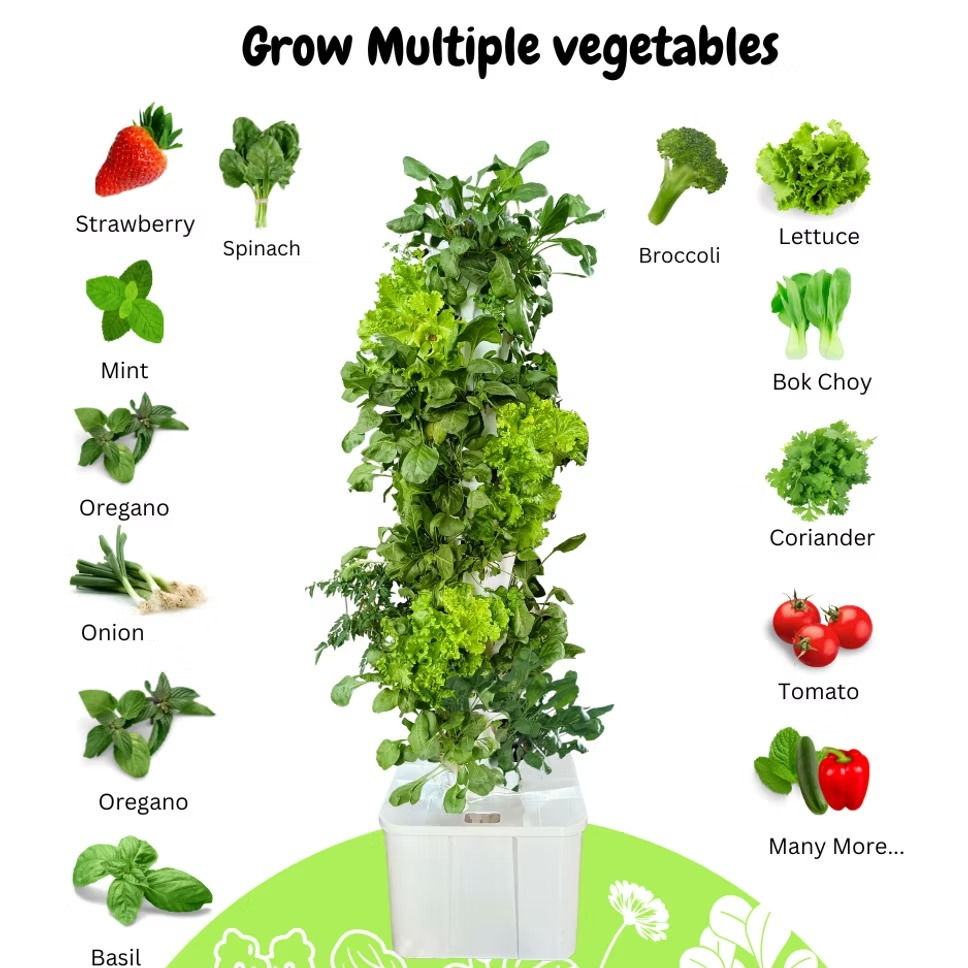
Leafy greens grow exceptionally well in vertical systems. Lettuce becomes lush, and spinach fills out quickly.
Herbs That Thrive Vertically
Basil and mint perform best on upper tiers. Regular cutting encourages regrowth, while coriander stays fresh throughout the year.
Fruits and Vegetables to Try
Chillies grow well at mid-height. Strawberries can hang freely from the edges, and microgreens grow successfully at all levels.
Check the tank frequently during hot weather. Clean misting nozzles weekly to maintain proper spray patterns.
Easy Cleaning Process
Rinse tower layers from top to bottom. Scrub the tank once a month, and replace parts easily if required.
Nutrient Balance
Refresh nutrient A and B mixes regularly. Monitor TDS levels to keep roots healthy. The UV-resistant plastic is durable in Indian conditions and requires minimal maintenance.
Electricity Consumption of Aeroponic Towers
Aeroponic towers are extremely energy efficient:
-
Small submersible pumps
-
Intermittent operation
-
No continuous lighting (outdoor)
Average power usage is less than a standard household bulb.
Why Aeroponic Towers Rank as the Future of Farming
Aeroponic towers combine:
-
Space efficiency
-
Faster growth
They are not just gardening tools—they are micro food systems for modern India.
Frequently Asked Questions
What is an aeroponic tower?
A vertical system where plant roots hang in air and receive nutrients via mist.
Is aeroponic tower farming profitable in India?
Yes, especially for leafy greens and herbs due to fast harvest cycles.
How much water does an aeroponic tower use?
Up to 95% less water than soil farming.
Can I use an aeroponic tower indoors?
Yes, with grow lights and indoor-rated systems.
Is aeroponic tower DIY worth it?
DIY is educational, but kits are more reliable and productive.
How many plants fit in one aeroponic tower?
Anywhere from 20 to 120 plants, depending on model.
Q1: Best vertical aeroponic tower beginner?
A: Nova 20 Phooldaan. 20 layers simple stack.
Q2: Water save vertical aeroponic tower?
A: 90-98% less soil. Mist wise use.
Q3: Plants per vertical aeroponic tower?
A: 20-120 easy. Layers pack tight.
Q4: Sun need vertical aeroponic tower?
A: 6-8 hours. All sides catch.
Q5: Clean vertical aeroponic tower easy?
A: Rinse layers quick. No soil fight.
Q6: Grow tomatoes vertical aeroponic tower?
A: Yes big stacks. Fruits hang free.
Q7: Cost power vertical aeroponic tower?
A: Pump low draw. Sun free fuel.
Q8: Indoor vertical aeroponic tower work?
A: Yes lights add. Nova 35 ready.
Q9: Fast harvest vertical aeroponic tower?
A: Roots oxygen max. Weeks not months.
Q10: Phooldaan ship vertical aeroponic tower?
A: Pan-India quick safe.
Why Choose Phooldaan Aeroponic Towers in India?
Phooldaan is not just selling aeroponic towers—it is building systems for Indian conditions.
Designed for India
-
Heat-resistant
-
UV-stable
-
Food-grade materials
-
Monsoon-safe construction
Strong Local Support
-
Pan-India shipping
-
Beginner guides
-
Spare parts availability
-
Responsive assistance
This local advantage is crucial when compared to imported systems.

How Aeroponic Towers Work
Aeroponic towers are the ultimate solution for people who want real food at home without traditional soil gardening hassles. Compared to conventional farming and pot gardening, aeroponic towers deliver nutrients directly to plant roots using a fine mist.

Seed or seedling establishment
Begin with seeds or young plants placed in grow ports.

Tower ecosystem
Nutrient-rich mist feeds plant roots suspended inside the vertical tower.

Faster growth
Oxygen and nutrients meet roots efficiently, boosting growth cycles.

Harvest fresh produce
Enjoy leafy greens and herbs right from your home — no soil, pesticides, or heavy watering.

Benefits You'll See with an Aeroponics Tower
Freshness Redefined
Grow your own garden-fresh lettuce, spinach, herbs, and more with peak nutrition and flavour, every day.
Healthier Lifestyle
Homegrown greens are naturally rich in vitamins and minerals — no pesticides, no uncertainty, just real food from your space.
Continuous Harvest
With proper setup and rotation, aeroponic towers can deliver continuous harvests throughout the year
Minimal Setup and Cleanup
Soil-free systems mean easy setup, less debris, and a cleaner home gardening experience.
Where to Place Your Aeroponic Tower
Balconies & Terraces
Best natural light and air exposure

Indoor Spaces
Place near windows or add grow lights for year-round growth.

Kitchen Corners
Fresh herbs literally at your fingertips
.

Rooftop and Greenhouses
High capacity and free sunlight exposure.

Efficient aeroponic systems are designed to optimise both water and electricity usage. Systems with advanced misting technology ensure minimal water waste and lower operational costs, making them suitable for year-round growing.
Crop selection also plays a key role in system performance:
-
Leafy greens and herbs grow well in all aeroponic systems
-
Fruiting plants such as chillies and tomatoes require larger systems like Orbit 36 or Nova 80
-
Microgreens thrive in compact towers like Lotus 30
