




Why Choose Aeroponic Towers?
Skip store-bought greens and grow fresh, pesticide-free vegetables and herbs at home with Phooldaan’s aeroponic towers. Designed for indoor spaces, balconies, kitchens, and rooftops, these vertical farming systems deliver high yields using no soil, minimal water, and zero mess—even in the smallest spaces

Faster Growth & Bigger Harvests
By feeding nutrients directly to plant roots, aeroponic towers accelerate growth cycles and boost plant health, giving you harvest-ready greens faster than soil gardening.
Ultra-Water Efficient
These towers use mist-based nutrient delivery, making water usage dramatically lower than soil or traditional hydroponics — perfect for urban homes with water constraints.
Space-Saving Vertical Design
Grow up instead of out. Aeroponic towers stack multiple plant points vertically, so even small balconies and kitchen corners become productive gardens without clutter.
Clean & Soil-Free
No soil means no mess, no pests, and no harmful run-off — just clean, fresh produce harvested straight from your tower.
Minimal Daily Care
Automated misting and low-maintenance design means you spend less time tending plants and more time enjoying your harvest.

How Aeroponic Towers Work
Aeroponic towers are the ultimate solution for people who want real food at home without traditional soil gardening hassles. Compared to conventional farming and pot gardening, aeroponic towers deliver nutrients directly to plant roots using a fine mist.

Seed or seedling establishment
Begin with seeds or young plants placed in grow ports.

Tower ecosystem
Nutrient-rich mist feeds plant roots suspended inside the vertical tower.

Faster growth
Oxygen and nutrients meet roots efficiently, boosting growth cycles.

Harvest fresh produce
Enjoy leafy greens and herbs right from your home — no soil, pesticides, or heavy watering.

Benefits You'll See with an Aeroponics Tower
Freshness Redefined
Grow your own garden-fresh lettuce, spinach, herbs, and more with peak nutrition and flavour, every day.
Healthier Lifestyle
Homegrown greens are naturally rich in vitamins and minerals — no pesticides, no uncertainty, just real food from your space.
Continuous Harvest
With proper setup and rotation, aeroponic towers can deliver continuous harvests throughout the year
Minimal Setup and Cleanup
Soil-free systems mean easy setup, less debris, and a cleaner home gardening experience.
Where to Place Your Aeroponic Tower
Balconies & Terraces
Best natural light and air exposure

Indoor Spaces
Place near windows or add grow lights for year-round growth.

Kitchen Corners
Fresh herbs literally at your fingertips
.

Rooftop and Greenhouses
High capacity and free sunlight exposure.

Efficient aeroponic systems are designed to optimise both water and electricity usage. Systems with advanced misting technology ensure minimal water waste and lower operational costs, making them suitable for year-round growing.
Crop selection also plays a key role in system performance:
-
Leafy greens and herbs grow well in all aeroponic systems
-
Fruiting plants such as chillies and tomatoes require larger systems like Orbit 36 or Nova 80
-
Microgreens thrive in compact towers like Lotus 30

SHOP AEROPONICS TOWERS ONLINE ON PHOOLDAAN
Discover Phooldaan’s curated collection of aeroponic and vertical hydroponic systems designed for modern indoor farming. Whether you are a beginner or an experienced grower, our range offers reliable, efficient, and space-saving solutions at competitive prices.
An aeroponic tower is a vertical, soil-free growing system that uses nutrient-rich mist to feed plant roots suspended in air, delivering faster growth, higher yields, and cleaner produce in compact spaces. This makes it ideal for urban homes, balconies, rooftops, cafés, and indoor spaces where fresh vegetables and herbs are grown with minimal water, low maintenance, and no soil mess.
What Is an Aeroponic Tower?
An aeroponic tower is a vertical farming unit where plants are grown in stacked layers, and their roots hang inside the tower column instead of being buried in soil. A hidden reservoir, pump, and misting system continuously circulate a nutrient solution, creating a controlled micro-environment for roots to absorb oxygen, water, and nutrients efficiently.
Key characteristics of an aeroponic tower:
· Vertical, multi-level design that supports 20 to 120 plants in systems like Nova 20, Nova 35, Nova 40, Lotus 30, Lotus 60, Nova 120 in the footprint of a single pot.
· Soil-free cultivation using nutrient mist instead of mud or traditional beds.
· Integrated water tank and reservoir, submersible pump, and timer-based mist cycles.
· Optional grow lights in indoor-focused models for all-season harvests.
By replacing soil with a fine nutrient mist, an aeroponic tower drastically reduces pest risks, nutrient loss, and water wastage while maximising plant health and productivity.
Aeroponic Tower How It Works
The phrase “aeroponic tower how it works” describes the complete process of how the tower turns water, nutrients, and electricity into a continuous supply of fresh greens and herbs. While designs vary across models like Nova and Lotus series, the working principle remains the same.
Step-by-step working of an aeroponic tower:
· Plant placement using aeroponic tower kits: Seeds or seedlings are placed in net pots or grow plugs that sit in planting slots on the tower body, allowing roots to extend inwards.
· Nutrient reservoir: A base tank stores water mixed with a balanced nutrient solution formulated for leafy greens, herbs, and microgreens.
· Pump and misting system: An energy-efficient submersible pump pushes the nutrient solution up the tower, where it is atomised into a fine mist around the exposed roots.
· Misting cycles: A mechanical or programmable timer controls on–off misting cycles, ensuring roots receive nutrients and oxygen at regular intervals without waterlogging.
· Gravity return: Excess solution naturally drains back into the reservoir, creating a closed-loop system that repeatedly recirculates water and nutrients.
· Growth and harvest: With high oxygen exposure and precision feeding, plants grow faster than in soil, allowing frequent harvesting of lettuce, spinach, basil, mint, coriander, and more.
This closed-loop, mist-based ecosystem is what makes an aeroponic tower efficient, compact, and extremely resource-conscious.
Core Components of an Aeroponic Tower
Understanding the components helps clarify aeroponic tower how it works in practical use. Each part is engineered to support stable, low-maintenance vertical farming at home or in commercial spaces.
Main components:
· Vertical tower body: A modular and stackable column with multiple planting ports; supports anywhere from 20 to 120 plants in systems like Nova 20, Lotus 30, Lotus 60, Nova 35, Nova 40, and Nova 120.
· Base reservoir tank: Stores nutrient solution; larger-capacity tanks (such as 40L–60L variants) stabilise nutrient levels and reduce refill frequency.
· Submersible pump: Circulates the solution upwards, creating pressure for consistent misting; designed to be energy-efficient for daily use.
· Misting nozzles or sprayers: Convert the nutrient solution into a fine mist, coating roots evenly and improving nutrient absorption.
· Timer or controller: Automates misting cycles to maintain an optimal balance between hydration and oxygen exposure.
· Grow lights (optional): Full-spectrum LEDs in indoor-focused towers like certain Nova models ensure healthy growth where natural sunlight is limited.
Together, these components create an intelligent, self-contained growing environment that keeps maintenance simple even for beginners.
Benefits of Using an Aeroponic Tower
An aeroponic tower offers a combination of speed, efficiency, and cleanliness that is difficult to replicate with soil or even basic hydroponic setups. It is designed specifically for space-conscious, health-focused urban lifestyles.
Key benefits:
· Up to 90% less water: Closed-loop misting drastically reduces water use compared to traditional soil gardening, making it ideal for cities facing water constraints.
· Faster plant growth: Direct nutrient and oxygen delivery around exposed roots shortens growth cycles, so leafy greens reach harvest faster than in soil.
· High space efficiency: Vertical design allows dense planting on balconies, terraces, kitchen corners, or indoor nooks without cluttering the floor.
· Cleaner, soil-free setup: No mud, fewer pests, and minimal risk of soil-borne diseases mean cleaner produce and a neater home environment.
· Low daily maintenance: Once set up, the tower mainly needs periodic water and nutrient refills, plus occasional cleaning of the reservoir and pump.
· Year-round harvests: With proper lighting and nutrient management, aeroponic towers can produce continuous crops across seasons, independent of monsoons or heat waves.
For urban families, cafés, wellness spaces, schools, and small farms, these advantages make the aeroponic tower a future-ready growing system.
Where you place an aeroponic tower directly influences its performance, especially in terms of light and airflow. These systems are flexible enough to be used both indoors and outdoors with small adjustments.
Best placements:
· Balconies and terraces: Provide natural light and ventilation, ideal for towers like Lotus 30 or Lotus 60.
· Kitchen and dining areas: Compact towers bring fresh herbs within arm’s reach, enhancing both décor and daily cooking.
· Rooftop gardens: Larger towers such as high-capacity Nova systems can turn rooftops into productive food gardens.
· Indoor living spaces: With grow lights and proximity to windows, aeroponic towers add greenery while functioning as productive indoor farms.
· Commercial and café spaces: Restaurants, salad bars, wellness studios, and organic cafés can grow visible, hyper-fresh produce on-site.
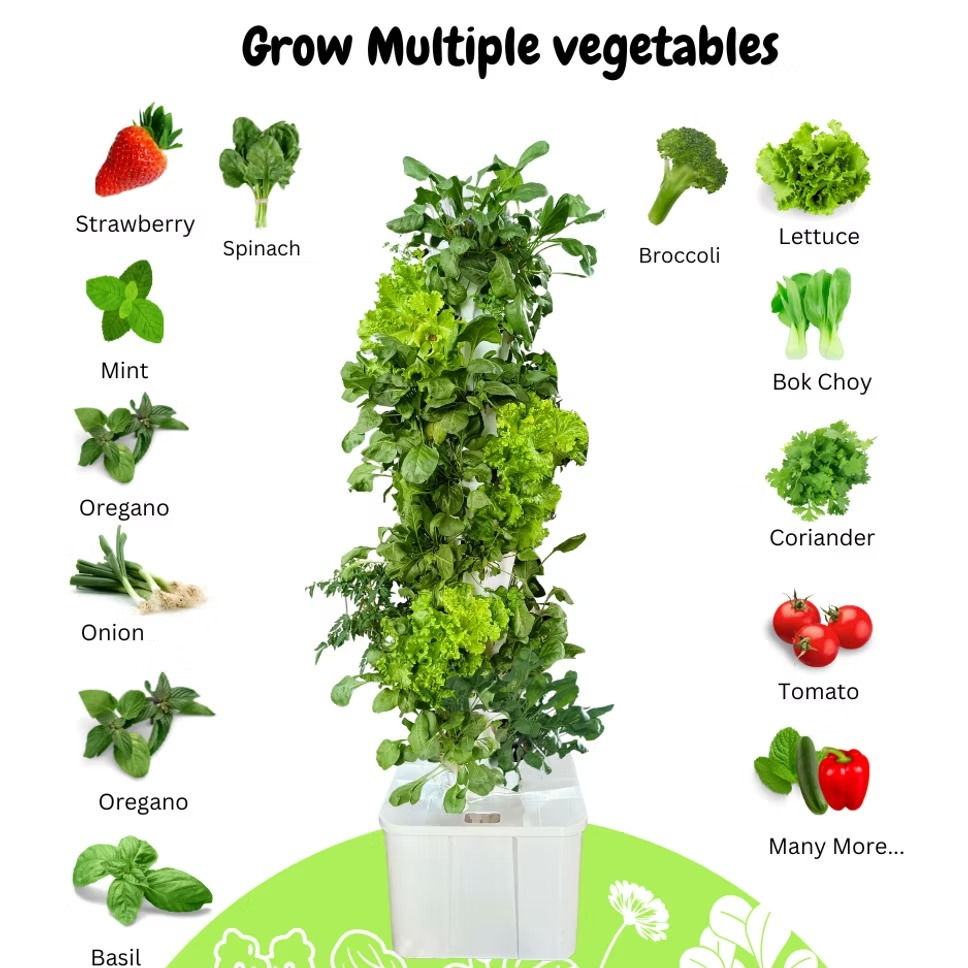
Typical crops include lettuce, spinach, kale, basil, mint, coriander, microgreens, and even strawberries or chillies in larger-capacity systems.
Frequently Asked Questions (FAQs)
1. What is an aeroponic tower?
An aeroponic tower is a vertical, soil-free farming system where plant roots are suspended inside a tower and fed using a fine nutrient-rich mist instead of soil.
2. How does an aeroponic tower work on a daily basis?
A pump circulates nutrient solution from a base tank to internal misting nozzles, which spray the roots at timed intervals, and the excess solution drains back into the tank for reuse.
3. What can be grown in an aeroponic tower?
Leafy greens, herbs, and compact vegetables such as lettuce, spinach, basil, mint, coriander, microgreens, and select fruiting crops like chillies or cherry tomatoes grow very well in these systems.
4. Is an aeroponic tower suitable for small apartments?
Yes, compact models are specifically designed for balconies, kitchen corners, and small indoor spaces, allowing up to dozens of plants in a very small footprint.
5. How much water does an aeroponic tower use?
Aeroponic towers can use up to 90% less water than traditional soil gardening because the nutrient solution is continuously recirculated in a closed loop.
6. Do aeroponic towers need a lot of electricity?
Electricity consumption is typically low and limited to running a small water pump and, in some cases, integrated grow lights for indoor setups.
7. Are aeroponic towers difficult to maintain?
No, maintenance mainly involves topping up water and nutrients, checking the pump and timer, and cleaning the tank and lines periodically to prevent clogging.
8. Can aeroponic towers be used indoors?
Yes, they are safe and clean for indoor use; when placed near windows or paired with grow lights, they support healthy, year-round plant growth.
9. Are crops from an aeroponic tower pesticide-free?
Because the system is soil-free and more controlled, pest pressure is much lower, which significantly reduces or eliminates the need for chemical pesticides.
10. Is an aeroponic tower good for beginners?
Yes, beginner-focused towers come with simple setup, automated misting, and clear instructions, making soil-free gardening accessible even to first-time growers.
Benefits of Using an Aeroponic Tower in India
Water Conservation
Aeroponic towers use up to 90% less water than soil gardening—critical for Indian cities facing water stress.
Year-Round Growing
Because the system is controlled, crops grow consistently across seasons.
Clean and Low-Maintenance
No soil means:
-
No weeds
-
Fewer pests
-
No mess
This makes aeroponics ideal for urban indoor environments.
Cost Savings Over Time
While there is an initial investment, aeroponic tower India systems save money long-term by:
-
Reducing grocery expenses
-
Eliminating soil purchases
-
Using low electricity (small pumps)
Power consumption comparisons are explained in the aeroponics vs hydroponics article
(Operating Cost Comparison here
Family Health and Learning Benefits
-
Children learn food cycles
-
Encourages sustainable habits
-
Improves indoor air quality
Why Choose Phooldaan Aeroponic Towers in India?
Phooldaan is not just selling aeroponic towers—it is building systems for Indian conditions.
Designed for India
-
Heat-resistant
-
UV-stable
-
Food-grade materials
-
Monsoon-safe construction
Strong Local Support
-
Pan-India shipping
-
Beginner guides
-
Spare parts availability
-
Responsive assistance
This local advantage is crucial when compared to imported systems.