


Beginner Friendly with Easy Setup
Pan India Fast and Assured Delivery
Grow Fresh Pesticide-Free Produce Year Round
Two-Year Warranty for Peace of Mind
What Is An Aeroponic Farming Kit?
An aeroponic farming kit is a collection of equipment required to grow plants without soil using nutrient-rich water delivered to exposed roots. A complete aeroponic kit typically includes growing towers, water reservoirs, pumps, irrigation components, timers, growing media, monitoring tools and plant support accessories.
What Do Most Aeroponic Farming Kits Include?
-
Growing towers
-
Reservoir
-
Water pump
-
Timer
-
Net cups
-
Growing media
-
Nutrient delivery system
-
TDS meter
-
pH monitoring tools

What's Included in an Aeroponic Farming Kit?
Everything Required To Build An Aeroponic Growing System
An aeroponic farming kit is more than a growing tower. Successful aeroponic farms combine growing structures, water management, monitoring tools and propagation equipment to create a complete growing ecosystem.
Whether you're starting with a single tower or planning a larger commercial setup, these are the essential components every aeroponic farm requires.

Aeroponic Towers

Water Reservoir & Circulation
Every aeroponic system depends on a reservoir to store and recirculate nutrient-rich water.
A properly designed reservoir helps maintain:
-
Consistent nutrient delivery
-
Stable water supply
-
Reduced maintenance
-
Better crop uniformity

Automation & Monitoring
Precision is what separates aeroponics from conventional farming.
Essential tools include:
✓ Irrigation Timers
✓ TDS Meters
✓ Water Monitoring Equipment
✓ Nutrient Management Accessories
These tools help maintain optimal growing conditions while reducing manual intervention.

Germination & Growing Accessories
Strong harvests begin with healthy seedlings.
Common farm essentials include:
-
Coco Peat
-
Seedling Media
-
Net Cups
-
Plant Supports
-
Replacement Components
Which Aeroponic Tower is Right For You?

NOVA 20
Best for First-Time Grower, Balconies & Small Families
20 Plant Capacity
15L Tank
3.5ft Tower Height
12" Base Diameter
2 year Tower Warranty

40 Plant Capacity
20L Tank
5.5ft Tower Height
1ft Base Diameter
2 year Tower Warranty
40 Plant Capacity
60L Tank
5.5ft Tower Height
1ft Base Diameter
2 year Tower Warranty

Build The Right Aeroponic Farm For Your Goals
From Home Production To Commercial Growing
Unlike fixed aeroponic kits, scalable aeroponic farming allows growers to start small and expand gradually based on production requirements.

Starter Setup
Perfect For Learning & Trial Growing
-
Nova 20 or Nova 40
-
TDS Meter
-
Timer
-
Germination Supplies
Ideal for:
Home growers, terrace gardeners and first-time aeroponic users.

Small Commercial Setup
Designed For Regular Production
-
Multiple Nova 40 Systems
-
Central Reservoir Management
-
Monitoring Equipment
-
Crop Expansion Capability
Ideal for:
Farm entrepreneurs, restaurants and local produce suppliers.

Commercial Production Setup
Built For Scale
-
Multiple Nova 120 Systems
-
Automated Irrigation Control
-
Advanced Monitoring
-
Continuous Harvest Scheduling
Ideal for:
Institutional growers, greenhouse operators and commercial farming projects.
Buy Aeroponic Towers for Your Aeroponic Farming Kit Online from Phooldaan




Complete your Aeroponic Farming Kit with these Accessories


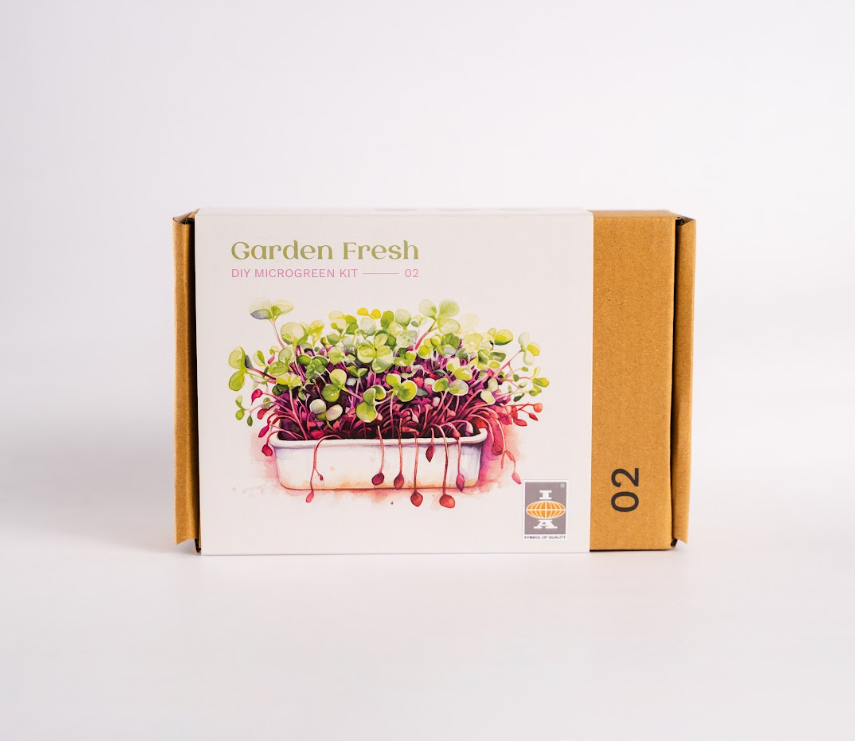
Add these Microgreen Kits in your Aeroponic Farming Kit




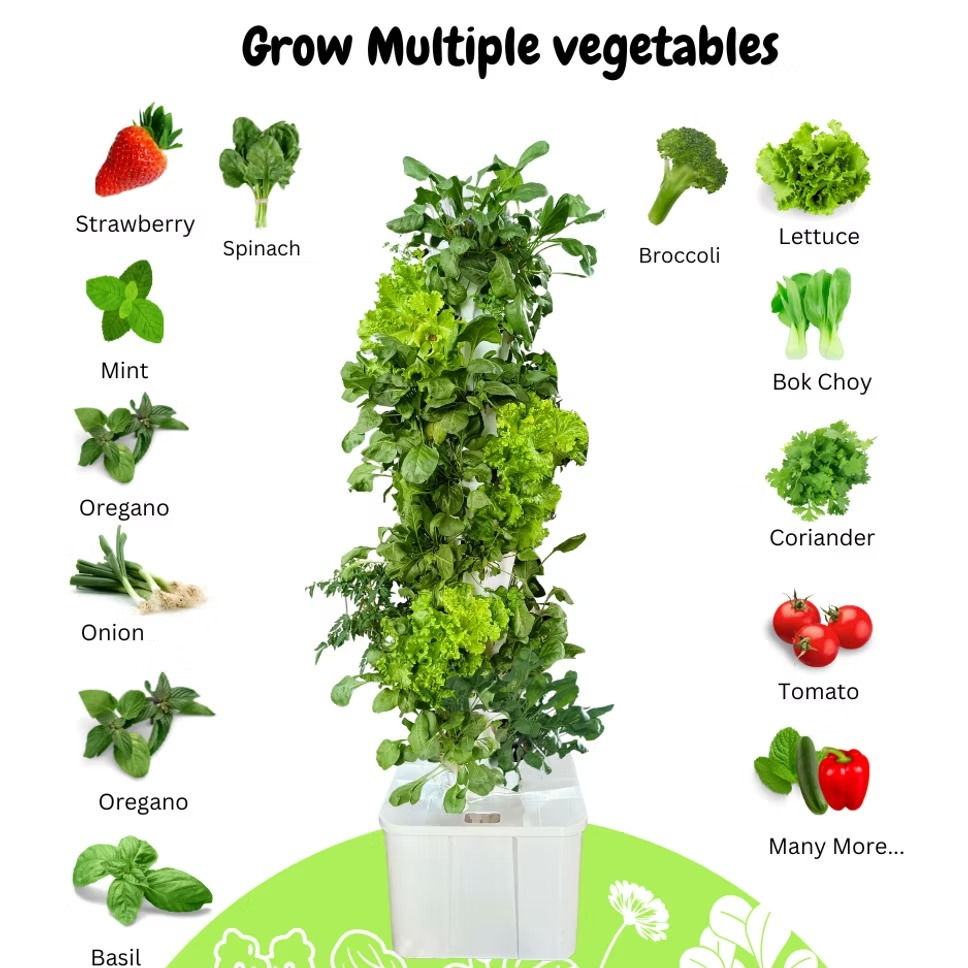
What Can You Grow in an Indoor Aeroponic Tower?

Time: 30-40 Days
Difficulty: Easy
Lettuce

Time: 25-35 Days
Difficulty: Easy
Spinach

Time: 30-45 Days
Difficulty: Easy
Basil

Time: 25-40 Days
Difficulty: Easy
Coriander

Time: 20-30 Days
Difficulty: Very Easy
Mint

Time: 35-45 Days
Difficulty: Medium
Kale

Time: 60-90 Days
Difficulty: Medium
Cherry Tomato

Time: 60-120 Days
Difficulty: Advanced
Strawberry
Faster Growth & Bigger Harvests
By feeding nutrients directly to plant roots, aeroponic towers accelerate growth cycles and boost plant health, giving you harvest-ready greens faster than soil gardening.
Ultra-Water Efficient
These towers use mist-based nutrient delivery, making water usage dramatically lower than soil or traditional hydroponics — perfect for urban homes with water constraints.
Space-Saving Vertical Design
Grow up instead of out. Aeroponic towers stack multiple plant points vertically, so even small balconies and kitchen corners become productive gardens without clutter.
Clean & Soil-Free
No soil means no mess, no pests, and no harmful run-off — just clean, fresh produce harvested straight from your tower.
Minimal Daily Care
Automated misting and low-maintenance design means you spend less time tending plants and more time enjoying your harvest.

How Aeroponic Towers Work
Aeroponic towers are the ultimate solution for people who want real food at home without traditional soil gardening hassles. Compared to conventional farming and pot gardening, aeroponic towers deliver nutrients directly to plant roots using a fine mist.

Seed or seedling establishment
Begin with seeds or young plants placed in grow ports.

Tower ecosystem
Nutrient-rich mist feeds plant roots suspended inside the vertical tower.
Faster growth
Oxygen and nutrients meet roots efficiently, boosting growth cycles.

Harvest fresh produce
Enjoy leafy greens and herbs right from your home — no soil, pesticides, or heavy watering.

Benefits You'll See with an Aeroponics Tower
Freshness Redefined
Grow your own garden-fresh lettuce, spinach, herbs, and more with peak nutrition and flavour, every day.
Healthier Lifestyle
Homegrown greens are naturally rich in vitamins and minerals — no pesticides, no uncertainty, just real food from your space.
Continuous Harvest
With proper setup and rotation, aeroponic towers can deliver continuous harvests throughout the year
Minimal Setup and Cleanup
Soil-free systems mean easy setup, less debris, and a cleaner home gardening experience.
Where to Place Your Aeroponic Tower
Balconies & Terraces
Best natural light and air exposure

Indoor Spaces
Place near windows or add grow lights for year-round growth.

Kitchen Corners
Fresh herbs literally at your fingertips everytime

Rooftop and Greenhouses
High capacity and free sunlight exposure.
Efficient aeroponic systems are designed to optimise both water and electricity usage. Systems with advanced misting technology ensure minimal water waste and lower operational costs, making them suitable for year-round growing.
Crop selection also plays a key role in system performance:
-
Leafy greens and herbs grow well in all aeroponic systems
-
Fruiting plants such as chillies and tomatoes require larger systems like Orbit 36 or Nova 80
-
Microgreens thrive in compact towers like Lotus 30

SHOP AEROPONICS TOWERS ONLINE ON PHOOLDAAN
Discover Phooldaan’s curated collection of aeroponic and vertical hydroponic systems designed for modern indoor farming. Whether you are a beginner or an experienced grower, our range offers reliable, efficient, and space-saving solutions at competitive prices.
Aeroponic Farming Kits in India: Components, Planning and Scalability
An aeroponic farming kit is a collection of systems and accessories designed to grow plants without soil while maintaining precise control over water, nutrients and root-zone oxygenation. Unlike conventional farming methods, aeroponic systems expose plant roots to highly oxygenated nutrient-rich water, enabling efficient growth in compact spaces.
As interest in controlled-environment agriculture grows across India, more growers are exploring aeroponic farming kits as a way to improve productivity while reducing dependence on large land parcels and excessive water consumption. Aeroponic systems are now being used by home growers, urban farming enthusiasts, educational institutions, greenhouse operators and commercial growers seeking predictable crop production.
At Phooldaan, we have observed that successful aeroponic growers rarely rely on a single component. Long-term success comes from combining the right growing towers, reservoirs, monitoring tools and propagation supplies into a complete growing ecosystem that can evolve with changing production requirements.
What Makes an Aeroponic Farming Kit Different From Traditional Growing Systems?
Traditional cultivation depends heavily on soil quality, weather patterns and land availability. Aeroponic farming kits replace many of these variables with controlled growing conditions.
-
Vertical growing that maximizes production per square foot.
-
Significantly lower water consumption compared to conventional farming.
-
Better root oxygenation and nutrient access.
-
Reduced exposure to soil-borne pests and diseases.
-
Greater flexibility for indoor, terrace and greenhouse cultivation.
For growers operating in urban areas or regions where water availability is a concern, aeroponics offers a practical alternative that prioritizes efficiency and consistency.
Essential Components Found in a Complete Aeroponic Farming Kit
Best Crops for Aeroponic Farming in India
Aeroponic systems are particularly effective for crops that respond well to controlled nutrient delivery and high root oxygen availability.
Leafy Greens
Leafy vegetables remain among the most successful aeroponic crops because of their relatively short growing cycles and consistent market demand.
Popular options include:
-
Lettuce.
-
Spinach.
-
Kale.
-
Pak choi.
-
Mustard greens.
Herbs
Herbs are well suited to vertical growing environments and often command premium market prices.
Common examples include:
-
Basil.
-
Mint.
-
Coriander.
-
Parsley.
-
Oregano.
Specialty and Experimental Crops
Many growers also explore crops such as strawberries, medicinal plants and specialty greens, particularly when targeting niche markets.
Crop performance depends on environmental conditions, nutrient management and cultivar selection.
Why Growers Choose Phooldaan for Aeroponic Farming Systems
Phooldaan focuses on making aeroponic growing accessible through scalable systems rather than one-size-fits-all solutions.
Instead of requiring growers to purchase oversized commercial packages, we enable them to build systems using individual components that match their available space, crop plans and future expansion goals.
This modular approach allows growers to start with the essentials and gradually expand their infrastructure while maintaining compatibility across their growing setup.
By combining aeroponic towers, monitoring equipment, growing accessories and propagation supplies within a single ecosystem, growers can create a practical foundation for long-term aeroponic cultivation without unnecessary complexity.
The Future of Aeroponic Farming in India
The future of agriculture is increasingly focused on efficiency, resource optimization and controlled-environment cultivation.
As urbanization continues, land availability decreases and water conservation becomes more important, aeroponic farming is expected to play a larger role in food production, educational projects, urban agriculture and commercial cultivation.
For growers seeking a scalable approach to modern farming, aeroponic farming kits provide a flexible pathway that combines productivity, space efficiency and precision growing technology in a single system.
Power Cuts, Heat, and Indian Climate Conditions
Power Cuts
Short power outages are common in many parts of India. Aeroponic towers are resilient to brief interruptions because roots remain moist for extended periods. Once power returns, the system resumes automatically.
Heat and Humidity
With proper airflow, shade during peak summer, and adequate hydration, aeroponic towers perform well across Indian climates. Seasonal adaptability is discussed here
Power Cuts
Short power outages are common in many parts of India. Aeroponic towers are resilient to brief interruptions because roots remain moist for extended periods. Once power returns, the system resumes automatically.
Heat and Humidity
With proper airflow, shade during peak summer, and adequate hydration, aeroponic towers perform well across Indian climates. Seasonal adaptability is discussed here
Sustainability and Environmental Impact of Aeroponic Towers
Aeroponic towers align strongly with sustainable urban living.
They:
-
Use significantly less water
-
Reduce food transportation distances
This makes aeroponic towers a responsible choice for environmentally conscious households. Learn more here
Expanded Frequently Asked Questions About Aeroponic Farming Kits
1. What is included in a complete aeroponic farming kit?
A complete aeroponic farming kit typically includes a growing tower, nutrient reservoir, water circulation system, net cups, growing media, irrigation components, monitoring tools and essential accessories required to start growing plants without soil. Depending on the system size, additional automation and nutrient management equipment may also be included.
2. How much does an aeroponic farming kit cost in India?
The cost of an aeroponic farming kit in India varies based on plant capacity, automation features and scalability. Entry-level systems for home growers are generally more affordable, while larger commercial systems require a higher investment. Contacting Phooldaan directly can help you identify the most suitable solution based on your budget and production goals.
3. Which aeroponic farming kit is best for beginners?
Beginners usually benefit from compact, easy-to-manage systems that allow them to learn nutrient management, irrigation scheduling and crop maintenance without excessive complexity. Modular systems are often preferred because they can be expanded as experience and production requirements grow.
4. Can I grow vegetables at home using an aeroponic farming kit?
Yes. Aeroponic farming kits are ideal for growing vegetables at home, especially leafy greens, herbs and compact crops. They are commonly installed on terraces, balconies, rooftops and indoor growing spaces where traditional gardening may not be practical.
5. How much space is required for an aeroponic farming kit?
One of the biggest advantages of aeroponics is space efficiency. Small systems can fit into compact urban spaces, while larger modular installations can be scaled for commercial production. The exact space requirement depends on the number of plants you intend to grow.
6. What crops grow best in aeroponic systems?
Leafy greens, lettuce, spinach, kale, basil, mint, coriander, parsley and other herbs perform exceptionally well in aeroponic systems. Many growers also experiment with strawberries and specialty crops depending on environmental conditions and market demand.
7. How much water does an aeroponic farming kit save?
Aeroponic systems can significantly reduce water consumption compared to conventional soil-based farming because water is continuously recirculated and delivered directly to plant roots. This makes aeroponics particularly attractive in regions where water conservation is important.
8. Is aeroponic farming suitable for Indian weather conditions?
Yes. Aeroponic farming can be successfully implemented across India when environmental conditions are properly managed. Many growers use aeroponic systems in greenhouses, shade-net structures, terraces and controlled indoor environments.
9. Do I need prior farming experience to use an aeroponic farming kit?
No. Many first-time growers successfully start with aeroponic systems. Basic knowledge of plant nutrition, irrigation scheduling and system maintenance is helpful, but modern systems are designed to simplify the growing process for beginners.
10. How long does it take to harvest crops in an aeroponic system?
Harvest timelines depend on the crop variety. Leafy greens and herbs often mature faster in aeroponic systems due to improved nutrient availability and root oxygenation. Many growers observe quicker growth cycles compared to traditional cultivation methods.
11. What maintenance is required for an aeroponic farming kit?
Routine maintenance includes checking nutrient levels, monitoring water quality, cleaning reservoirs, inspecting pumps and ensuring irrigation systems operate correctly. Regular monitoring helps maintain healthy plant growth and system efficiency.
12. Can aeroponic farming kits be expanded later?
Yes. Modular aeroponic systems are specifically designed for scalability. Growers can begin with a smaller setup and add additional towers, reservoirs and accessories as production requirements increase.
13. Are aeroponic farming kits profitable for commercial growers?
Aeroponic farming can be profitable when growers focus on high-demand crops, maintain consistent production and optimize operational efficiency. Profitability depends on crop selection, market access, production scale and management practices.
14. What nutrients are required for aeroponic farming?
Plants grown aeroponically require balanced nutrient solutions containing essential macro and micronutrients. Nutrient requirements vary depending on crop type, growth stage and environmental conditions.
15. Can aeroponic systems be used indoors?
Yes. Aeroponic systems are widely used indoors, especially in urban environments. Indoor growers often combine aeroponic towers with artificial lighting and environmental controls to create ideal growing conditions year-round.
16. Why should I choose a modular aeroponic farming kit?
Modular systems provide flexibility, allowing growers to start small and expand gradually. This approach reduces upfront investment while ensuring future compatibility as production goals evolve.
17. How do I select the right aeroponic farming kit for my needs?
The best system depends on available space, crop selection, production targets and budget. Home growers, entrepreneurs and commercial operators often require different configurations, making consultation and planning important before purchase.
18. Does Phooldaan provide support for aeroponic growers?
Phooldaan focuses on providing scalable aeroponic systems, growing accessories and essential cultivation components that help growers build efficient and expandable growing environments tailored to their objectives.
19. Can aeroponic farming help reduce pesticide usage?
Aeroponic systems reduce exposure to many soil-borne pests and diseases, which can help lower pesticide dependence. However, proper crop monitoring and integrated pest management practices remain important for healthy production.
20. How can I get started with an aeroponic farming kit from Phooldaan?
Getting started is simple. Evaluate your available space, identify your crop goals and choose a scalable aeroponic solution that matches your requirements. Explore Phooldaan's range of aeroponic towers, accessories and growing supplies to build a system that supports both current and future production needs.
The Future of Aeroponic Towers in India
As Indian cities become denser and food systems face increasing pressure, aeroponic towers in India are positioned to become a standard household feature.
They combine:
-
Advanced agricultural science
-
Urban-friendly design
-
Health-focused living
-
Sustainability
For households seeking control over food quality without sacrificing convenience, aeroponic towers represent one of the most future-proof home investments available today.
For a broader understanding of home aeroponics, return to the pillar page