
How to Start Aeroponic Farming at Home
Updated: Jul 30

Growing fresh food at home is no longer just an aspiration for people living in India's cities. Aeroponic farming makes it real — no soil, no mess, no dependence on the monsoon, and no need for a large garden. Whether you have a balcony in Mumbai, a terrace in Bengaluru, or a sunny kitchen corner in Delhi, aeroponic farming at home is now one of the most practical and rewarding ways to grow your own fresh produce year-round.
Aeroponic farming for beginners can feel slightly technical at first, but the process is far simpler than it looks once you understand the fundamentals. Plants grow with their roots suspended in air, fed by a fine nutrient mist at regular intervals. No digging. No weeding. No soil-borne diseases. Just clean, fast-growing produce right where you need it.
This post covers everything a beginner needs: how the system works, how it compares with other growing methods, which crops to start with, what it will cost, and a clear step-by-step path to your first harvest.

What is Aeroponic Farming and How Does it Work?
Aeroponic farming is a method of growing plants completely without soil. Instead of roots anchored in earth, they hang freely in air inside a vertical tower or enclosed grow chamber. At timed intervals, usually every 10 to 30 minutes: a fine mist of water and dissolved nutrients is sprayed directly onto the exposed roots. This delivers oxygen, hydration, and nutrition all at once, which is why aeroponic plants grow significantly faster than those in soil or even conventional hydroponics.
The core components of a home aeroponic system
• A vertical tower structure (the growing chamber with plant ports)
• A reservoir tank that holds the nutrient-water solution
• A water pump that circulates the solution through the system
• A timer that controls the misting cycle
• Net pots or grow ports where seedlings are placed
When the pump activates, nutrient solution is pushed upward through the tower and released as a fine mist over the exposed root zone. Excess solution drains back into the reservoir below and is recirculated, this closed-loop design means water is reused rather than wasted, making aeroponics one of the most water-efficient growing methods available, using up to 90% less water than conventional soil farming.
The reason aeroponic systems outperform soil is straightforward: oxygen. In soil, roots compete for limited oxygen trapped between soil particles. In an aeroponic system, roots are fully exposed to air between misting cycles, giving them maximum oxygen uptake. This results in faster nutrient absorption, faster growth, and healthier plants overall.
Unlike hydroponics, where roots sit submerged in a water solution, aeroponics keeps roots in open air with intermittent misting. This avoids waterlogging and gives plants the best of both environments: moisture and oxygen simultaneously.
Aeroponics vs Hydroponics vs Soil: Quick Comparison for Indian Home Growers
Factor | Soil Farming | Hydroponics | Aeroponic Tower Farming |
Water Usage | High (lots of runoff & evaporation) | Low (~70–80% less) | Very Low (up to 90% less) |
Root Oxygen | Limited by soil compaction | Moderate (submerged) | Maximum (open air exposure) |
Growth Speed | Baseline | Faster than soil | Fastest (2–3x soil) |
Pest & Disease Risk | High (soil-borne) | Moderate | Very Low (soil-free) |
Space Efficiency | Horizontal, land-dependent | Moderate | Vertical, 1 sq ft footprint |
Home Suitability | Difficult in apartments | Possible but messy | Ideal — balcony to kitchen |
Maintenance | Daily watering, weeding | Regular water changes | Automated misting, periodic checks |
As the table shows, aeroponic vertical farming offers the most advantages for urban Indian households — particularly around water efficiency, space, and the elimination of soil-related problems.
Why Aeroponic Farming at Home Makes Sense in India
India's urban households face some very specific challenges when it comes to growing food at home. Space is limited. Water is precious. Summers are harsh. Monsoon humidity encourages pests and mold in soil containers. And most balconies or rooftops lack the infrastructure for traditional pot gardening.
Aeroponic tower farming addresses all of these challenges at once.
Space
A single aeroponic tower occupies a floor footprint of under one square foot while growing 20 to 60 plants vertically. A terrace or balcony that seemed too small for a garden becomes a productive growing space without clutter.
Water
Because nutrient solution is recycled in a closed loop, home aeroponic systems use a fraction of the water that conventional pot gardening requires. In cities like Chennai, Pune, or Bengaluru where water rationing is common, this is a meaningful practical advantage.
Climate
Aeroponic towers built for Indian conditions handle summer heat on terraces and monsoon humidity without the root rot and disease that plague soil-based containers. Roots remain clean and aerated regardless of what's happening outside.
Food Safety
Soil carries pesticide residues, heavy metals, and pathogens. Aeroponic farming eliminates soil entirely, meaning the produce you grow at home is free from these risks. This is one of the strongest arguments for urban home growing in India, where food contamination concerns are growing every year.
Year-Round Harvest
Aeroponic vertical farming is not seasonal. With stable nutrient delivery and either natural sunlight (on terraces or balconies) or grow lights (for fully indoor setups), your tower can produce fresh greens and herbs every month of the year — no monsoon, no summer, no off-season.

Choosing the Right Aeroponic Tower for Your Home in India
The most important decision for beginners is selecting the right aeroponic tower — and the right choice depends on where you plan to keep it, how many plants you want to grow, and whether you have access to natural sunlight.
For balconies and terraces (outdoor aeroponic tower farming)
Towers designed for outdoor placement use natural sunlight and are engineered to handle direct exposure to heat, rain, and wind. They are ideal for most Indian homes and deliver excellent results with leafy greens and herbs.
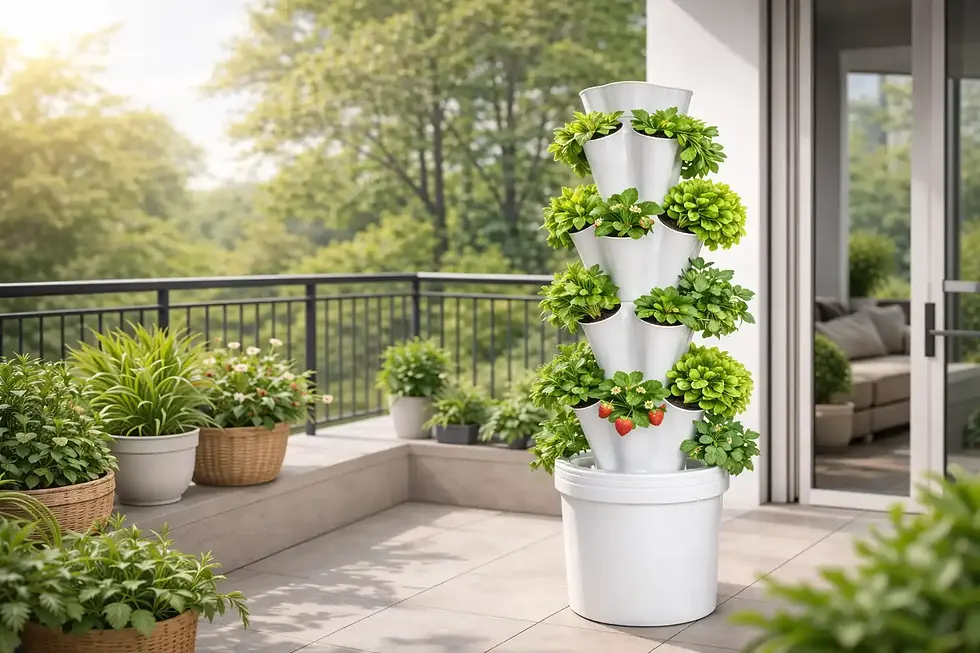
Phooldaan's Nova 20 is a popular starting point for outdoor aeroponic farming — it holds 20 plants, has a compact footprint, and is purpose-built for Indian outdoor conditions. For growers who want more growing capacity, the Lotus 30 and Lotus 60 offer higher plant counts while remaining fully manageable on a standard terrace or rooftop.
For indoor spaces (kitchen, room, or apartment)
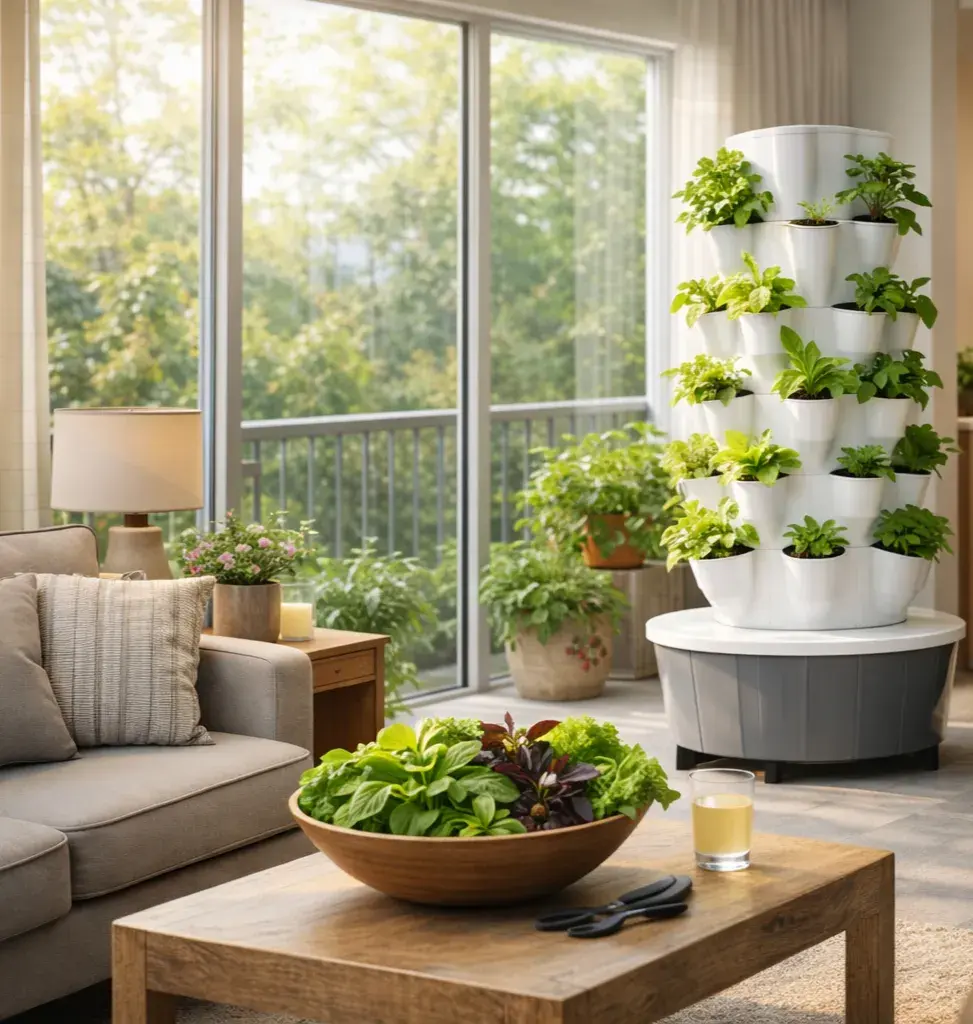
Indoor aeroponic towers require grow lights because natural light is insufficient for most enclosed environments. The Nova 35 from Phooldaan is designed specifically for this use — it includes integrated grow lights and is engineered for year-round indoor cultivation. It can sit near a window, in a kitchen corner, or in a dedicated grow space.
For those planning to scale up
If you begin with a small tower and later want more produce, Phooldaan's range makes scaling straightforward. The Nova 40, Lotus 60, and Nova 120 all operate on the same principle as entry-level models — no need to relearn the system as you grow.
Key questions to ask before choosing
Do I have natural sunlight access? (If yes, an outdoor tower works; if no, choose a model with grow lights)
How much floor space can I dedicate? (Even 1 sq ft is enough to start)
How many plants do I realistically need? (Most Indian families start with 20–40 plant sites)
Do I need portability, or is a fixed installation fine?
Phooldaan's towers are specifically engineered for Indian power conditions, temperature ranges, and crop preferences. This matters far more than it might appear when comparing a locally designed system against a generic imported option.
Best Crops to Grow in a Home Aeroponic Tower in India
One of the most common beginner mistakes is choosing crops that are too demanding for a first system. The good news: the safest crops for beginners are also the most useful for a typical Indian household.
Crop | Why it works well in India | Difficulty | Days to First Harvest |
Lettuce | Fast growth, forgiving, loved by restaurants | Easy | 25–35 days |
Spinach | Everyday use in Indian kitchens, low EC needs | Easy | 25–30 days |
Basil | High value, aromatic, thrives in mist | Easy | 21–28 days |
Mint | Nearly foolproof, continuous harvest | Very Easy | 20–28 days |
Coriander | Most-used herb in Indian cooking, grows fast | Easy | 21–28 days |
Kale | Nutritious, handles Indian terrace heat well | Easy–Medium | 30–40 days |
Microgreens | Fastest turnaround, ideal for compact towers | Very Easy | 7–14 days |
Cherry Tomatoes | Higher yield value, needs bigger system | Medium | 55–70 days |
Chillies | Indian kitchen staple, needs stable nutrients | Medium | 60–80 days |
Strawberries | Premium crop, good margins, tower-friendly | Medium | 45–60 days |
For Indian conditions specifically, coriander, mint, and spinach are the most immediately practical choices — used daily in most kitchens, grown quickly, and performing reliably in aeroponic systems. Basil has seen rising demand from restaurants and health-conscious consumers, making it an interesting option for families who want to grow a small surplus.
Phooldaan's customer teams consistently find that starting with leafy greens and herbs produces the fastest confidence for new growers. Visible results appear within the first week of planting, which makes building the habit much easier than waiting months for fruiting crops.

Aeroponic Farming Cost at Home in India — What to Realistically Budget
Cost is where many beginners pause — but aeroponic farming at home in India is far more accessible than most assume, especially when viewed as a comparison to ongoing grocery spending on fresh herbs and vegetables.
Budget Breakdown by setup level
Setup Level | Who It's For | Tower Cost (approx.) | Total First-Time Budget |
Starter | Beginners — balcony or terrace, 20–40 plants | ₹3,400 – ₹5,400 | ₹4,100 – ₹6,900 |
Mid-Capacity | Committed home growers, 40–80 plants | ₹5,400 – ₹12,400 | ₹8,900 – ₹16,000 |
Premium / Indoor | Serious growers, indoor with lights, 80–120+ plants | ₹12,400+ | ₹15,000 – ₹22,000 |
What beginners often overlook in their budget
Backup power (a small inverter for the pump) — essential in areas with frequent power cuts, as roots can dry out within 2–4 hours if the pump stops
Quality nutrients — the most common reason yields disappoint is cutting corners on nutrient solutions
A TDS/EC meter — a small investment that gives you clear feedback on your nutrient levels and prevents guesswork
pH adjustment solutions (pH up and pH down) — simple but critical for maintaining the 5.5–6.5 range most leafy greens need
Compared to the ongoing cost of buying fresh produce from supermarkets or organic stores, a home aeroponic system typically pays for itself within a few growing cycles — particularly if you are growing herbs like basil, coriander, or mint, which command high prices and are harvested continuously.
Phooldaan offers aeroponic towers across this full price range, and the team can guide you toward the right configuration based on your available space, crop goals, and budget.
Step-by-Step: How to Start Aeroponic Farming at Home in India
Starting aeroponic farming at home does not require agricultural training or technical expertise. What it requires is the right equipment and a clear first-week routine. Here is a practical step-by-step approach built for complete beginners.
Choose your location. Pick a spot that gets at least 4–6 hours of natural sunlight daily (for outdoor towers), or has space for a grow light (for fully indoor setups). Balconies, terraces, kitchen windows, and indoor grow corners all work well. Ensure a nearby power socket is accessible for the pump.
Set up your tower and reservoir. Assemble the tower following the included instructions. Fill the reservoir with clean water — filtered or RO water is ideal in most Indian cities. Avoid direct bore water with high TDS unless it has been treated.
Mix and adjust your nutrient solution. Add the recommended amount of aeroponic nutrients to the reservoir. Measure pH (target range: 5.5–6.5) and EC (1.0–2.5 mS/cm for most leafy greens). Adjust using pH up or pH down solutions if needed.
Place your seedlings or seeds. Insert seedlings into the net pots in the grow ports. If starting from seed, use rockwool or coco coir plugs — no soil needed. Ensure the roots are positioned to receive the mist from below.
Set your misting timer. Most home aeroponic systems run on a cycle of 15–30 minutes on, 15–30 minutes off. Set the timer per your system's recommendation and let it run.
Monitor your first week actively. Check reservoir level daily. Observe root colour — healthy roots are white to light tan. Watch for early yellowing in leaves, which usually signals a pH or nutrient issue. Adjust EC or pH as needed.
Harvest and continue growing. Most leafy greens and herbs are harvest-ready within 3–5 weeks. Harvest outer leaves to allow continued regrowth from the centre — this gives you a continuous supply rather than a single-cut harvest.
Your ongoing maintenance routine
Frequency | What to Check | Why It Matters |
Daily | Reservoir water level, misting sound/cycle running, leaf colour | Roots dry in 2–4 hrs if pump stops; yellowing signals early imbalance |
Every 2–3 Days | pH (target 5.5–6.5) and EC/TDS of nutrient solution | pH drift is the most common cause of stunted growth in home systems |
Weekly | Root colour (healthy = white/light tan), root zone smell, pump filter | Brown or slimy roots indicate disease; clean smell confirms healthy system |
Monthly | Full system flush and clean, check nozzles, inspect tower structure | Mineral buildup clogs misting and reduces effectiveness over time |

Frequently Asked Questions About Aeroponic Farming at Home
Is aeroponic farming good for complete beginners?
Yes. Modern aeroponic tower systems are designed to be straightforward, with automated misting cycles and simple nutrient management. The main learning curve is understanding pH and EC — both of which most beginners master within their first week of monitoring.
How much does aeroponic farming at home cost in India?
A starter setup in India typically costs between ₹4,100 and ₹6,900, including the tower, reservoir, pump, and initial nutrients. Mid-range setups with more plant capacity cost ₹9,000 to ₹16,000. Recurring costs after setup are minimal — primarily nutrients and a small amount of electricity.
Can aeroponic tower farming work on a small balcony?
Absolutely. Aeroponic vertical farming towers are specifically designed for small spaces. A tower growing 20–40 plants fits in under one square foot of floor space, making it suitable even for compact Mumbai or Delhi apartment balconies.
How often do I need to check the nutrient solution?
Check the reservoir level and pH daily during your first two weeks. Once you have a stable routine established, checking every 2–3 days is sufficient for most leafy greens and herbs.
What happens if the power goes out?
If the pump stops, roots can begin to dry out within 2–4 hours in warm conditions. For homes in areas with frequent power cuts, a small inverter or UPS for the pump is a worthwhile investment — it is one of the most important backup measures for aeroponic farms in India.
Do I need grow lights for outdoor aeroponic farming?
No. If your system is placed in a spot with 4–6 hours of direct or indirect sunlight, grow lights are not needed for outdoor setups. They are required for fully indoor systems with limited or no natural light access.
Which aeroponic crops grow fastest for Indian home growers?
Microgreens are the fastest at 7–14 days. Mint, coriander, and basil are next at 20–28 days. Lettuce and spinach typically reach harvest in 25–35 days. These are all excellent first crops for aeroponic farming for beginners.
Is aeroponics better than hydroponics for home use in India?
For most Indian home growers, aeroponics offers meaningful advantages over hydroponics: better root oxygenation, faster growth, lower disease pressure, and greater water efficiency. Hydroponics is a capable system, but aeroponic tower farming uses less water, produces cleaner root environments, and is more space-efficient for balconies and terraces.
Where to Begin Your Aeroponic Farming Journey
The clearest starting point for aeroponic farming for beginners in India is a compact, outdoor-ready aeroponic tower, starting with quick-growing leafy greens and herbs, and keeping your first system simple while you build confidence with nutrient and pH management.
Most beginners who plant mint, coriander, or lettuce in their first week see visible growth within 5–7 days. That early momentum is what makes aeroponic farming genuinely habit-forming — and what separates it from the effort and inconsistency of soil-based pot gardening.
The biggest single risk for a new aeroponic home grower is not nutrient complexity or maintenance — it is power failure without a backup in place. Get a small inverter for your pump before you plant anything else.
Phooldaan's aeroponic towers are designed and engineered specifically for Indian homes, from the power compatibility to the structural materials chosen for year-round outdoor use. The range spans from the compact Nova 20 for first-time balcony growers all the way to the Nova 120 for serious home and semi-commercial setups — with everything in between for growing families and urban farms.
Every system comes with the components needed to start growing, and Phooldaan's team is available to guide you through your first setup, crop selection, and nutrient routine. You do not need to figure it out alone.


Comments