

Which Buddha Statue is Good for Home
Handcrafted
Thoughtfully crafted with fine detailing
Serene Design
Designed to evoke calm and positive energy
Durable Finish
Made using high-quality materials
Versatile Decor
Perfect for Every Space
Our Buddha Statues blend timeless artistry with spiritual elegance, helping you create tranquil spaces that inspire mindfulness, peace, and harmony.
Upgrade your home with Phooldaan's Buddha Statues!
Why Buddha Statues Belong in Every Space
Create calm, mindful environments with Phooldaan’s curated Buddha Statue collection, designed for homes, offices, meditation corners, and gardens. Each statue is thoughtfully crafted to bring balance, serenity, and timeless aesthetic appeal—making them perfect for modern living spaces seeking peace and positivity.

Meditative Buddha Statues
Ideal for calm corners

Handcrafted Buddha Statues
Crafted with detail

Peaceful Home Decor
Enhance positive energy

Indoor & Outdoor Buddha Statues
Versatile placement
Buy Buddha Statue is Good Home Online from Phooldaan






Buddha Statues for Every Space
Modern living spaces are often filled with noise, visual clutter, and constant movement. Buddha statues help restore balance by introducing stillness, mindfulness, and a sense of calm into everyday environments. Each space has a different purpose, which is why Phooldaan offers Buddha statues in a variety of styles, sizes, and finishes—making it easy to find the right piece for your home, workspace, or outdoor area.

Living Rooms
Statement pieces for serene interiors

Bedrooms
Peaceful presence for restful spaces

Home - Offices
Calm that improves focus

Balconies and Corners
Quiet moments in everyday spaces

Benefits You'll Experience with Buddha Statues
Calm and Mindfulness
Create peaceful surroundings that encourage relaxation, meditation, and emotional balance in everyday spaces.
Positive Energy
Buddha statues are believed to promote harmony, clarity, and a sense of well-being in homes and workspaces.
Timeless Aesthetic
Thoughtfully crafted designs add elegance and serenity, blending spiritual meaning with modern décor.
Low-Maintenance Decor
No upkeep, no effort—just lasting beauty and calm that enhances your space effortlessly.
Which Buddha Statue Is Good for Home?
Meditating Buddha Statue
The meditating Buddha statue is traditionally recognized by the Dhyana Mudra, a hand gesture where the Buddha is seated cross-legged with both hands resting gently in his lap, palms facing upward. In this posture, the right hand rests on top of the left, with the tips of the thumbs often touching to form a small, symbolic triangle that represents the alignment of mind, body, and spirit.
This specific pose embodies absolute stillness, deep concentration, and the ultimate attainment of inner peace and spiritual awakening. It is an ideal choice for anyone looking to create a serene environment, as it naturally encourages a sense of calm and mental clarity. To maximize its grounding energy, traditional design principles recommend placing the statue on a raised platform in the Northeast corner of your home, or inside a dedicated study, living room, or meditation space where you want to reduce stress and invite quiet reflection.
Reclining Buddha Statue
The reclining Buddha statue depicts the Buddha lying on his right side, typically with his head resting gently on a pillow or supported by his right elbow and hand. This profound posture captures the Buddha during his final hours on Earth as he prepared to enter Mahaparinirvana—the ultimate state of spiritual liberation and freedom from the cycle of rebirth. Because it represents a state of absolute transition and freedom from worldly suffering, the statue is viewed as a powerful symbol of supreme peace, inner harmony, and detachment.
When brought into a living space, the reclining Buddha is meant to radiate a deeply soothing, grounding atmosphere that helps ease internal stress. To honor its traditional symbolism, design frameworks recommend placing this statue on a raised table or shelf in a quiet area of the home, such as a formal living room or study. It is ideally positioned facing the West direction, which aligns with the energy of release, peace, and stable comfort for the entire household.
Blessing Buddha Statue
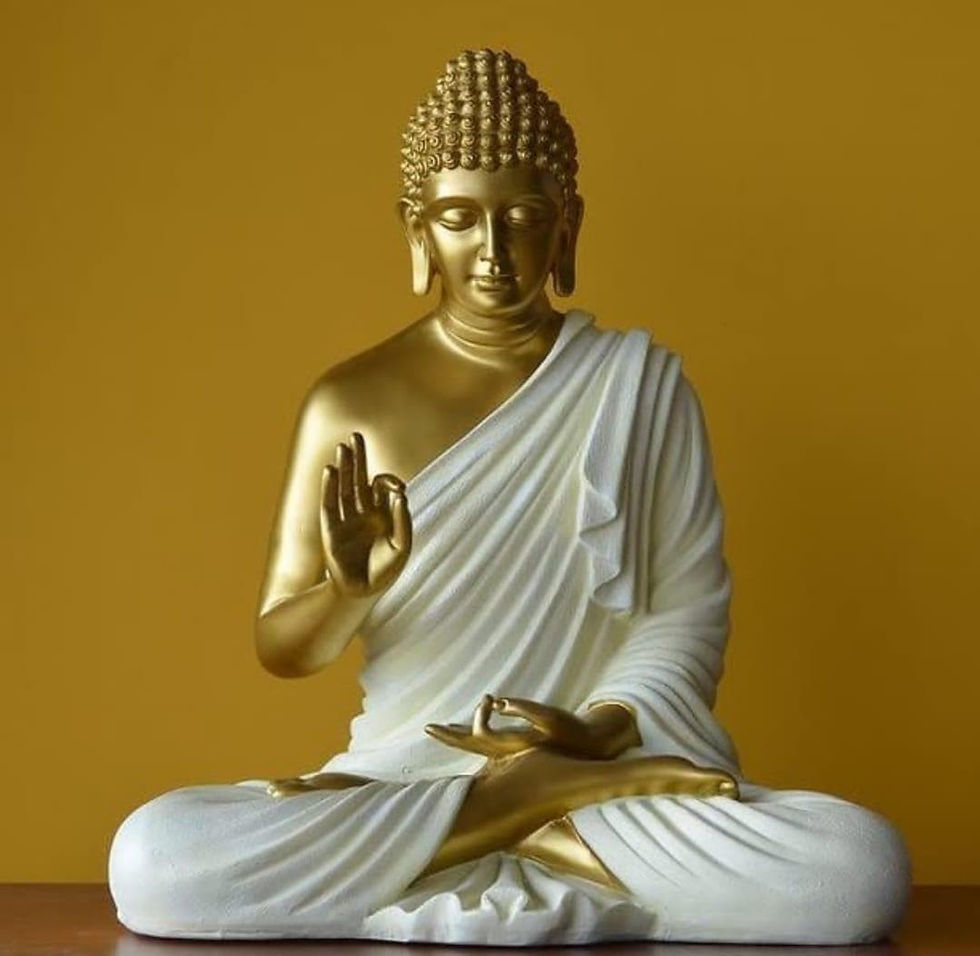
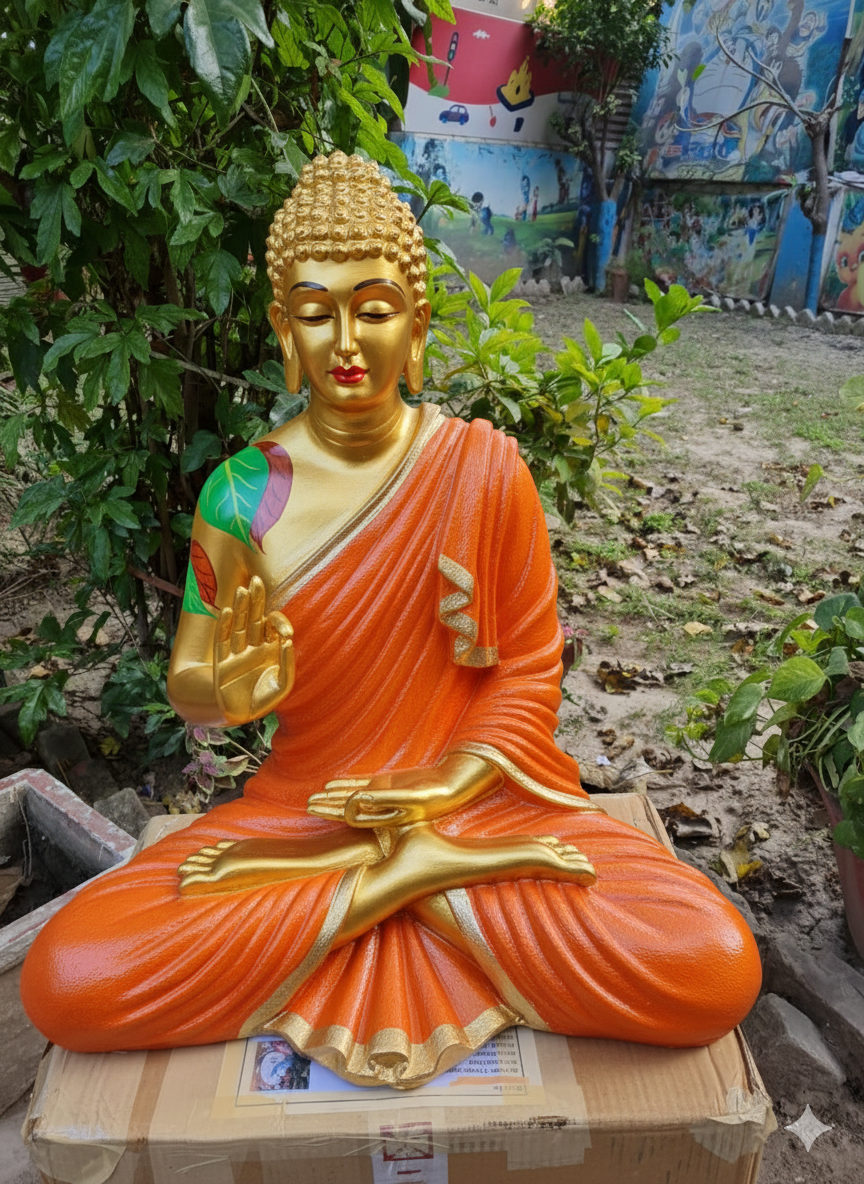
The blessing Buddha statue, characterized by the Abhaya Mudra, features the Buddha either sitting or standing with his right hand raised to chest level, palm facing outward, while the left hand rests flat in his lap or points downward in a gesture of giving. This powerful posture signifies fearlessness, protection, and the granting of divine blessings. The outward-facing palm acts as a spiritual shield that dispels fear, anxiety, and negative influences, replacing them with a sense of inner courage and deep peace.
To effectively channel this protective energy, traditional placement principles suggest positioning the statue on a raised pedestal near the main entrance or foyer of the home. Placing it so that it directly faces the front door allows the statue to intercept and neutralize any negative or chaotic energy before it enters your living space, ensuring a safe, welcoming, and harmonious environment for the entire household.
Laughing Buddha vs. Gautam Buddha
While often confused, the Laughing Buddha and Gautam Buddha are entirely different figures arising from distinct historical, geographical, and spiritual traditions.
Gautam Buddha (Siddhartha Gautama) was a historical spiritual leader born in ancient India during the 6th century BCE who attained supreme enlightenment and founded the core teachings of Buddhism. In art and statues, he is depicted as lean and deeply serene, typically sitting in meditation with closed eyes, elongated earlobes, and a cranial bump (ushnisha) that symbolizes cosmic wisdom. Statues of Gautam Buddha are brought into homes to cultivate a calm, spiritual environment focused on mindfulness, tranquility, and inner peace.
In contrast, the Laughing Buddha is based on Budai, a eccentric 10th-century Chinese Zen monk who was famous for carrying a cloth sack full of sweets and gifts for children, spreading infectious cheer wherever he traveled. In Chinese folklore, he became revered as an incarnation of Maitreya, the future Buddha. Visually, he is instantly recognizable by his bald head, wide gleeful smile, and robust, prominent belly. While Gautam Buddha represents the path to spiritual liberation from suffering, the Laughing Buddha is integrated into Feng Shui and popular culture to invite worldly joy, lighthearted happiness, good luck, and financial abundance into a household.
Determining which Buddha statue is best for your home depends entirely on your personal intention and the specific energy you want to invite into your living space. According to traditional Vastu and Feng Shui frameworks, there is no single "best" option, but rather a choice tailored to your needs. If your primary goal is to foster inner peace, mindfulness, and reduce household stress, the Meditating Buddha (Dhyana Mudra) placed in a quiet corner or the Northeast sector is ideal. For those seeking protection from negative vibes, anxiety, or external disturbances, the Blessing or Protection Buddha (Abhaya Mudra) positioned right at the main entrance facing outward is considered the most effective selection. Meanwhile, if you are looking to attract financial growth, good fortune, and joyful energy to the family dynamic, a Laughing Buddha situated in the Southeast or facing the main entrance is highly recommended.
Regardless of which form aligns with your goals, the absolute best practice for any home Buddha statue centers on respectful and mindful placement. To keep the energy pure and clear, a Buddha idol should always be clean, uncluttered, and resting on an elevated table, pedestal, or shelf that sits at or above your eye level. It should never be placed directly on the floor, in a kitchen, a bathroom, or underneath a staircase, as these locations disrupt the quiet, harmonizing aura the statue is meant to radiate. Focus on picking a durable, elegant material like brass, natural stone, or matte wood that complements your home’s existing aesthetic, transforming a simple piece of decor into a grounding anchor of daily tranquility.
Buddha Statues for Living Room
Placing a Buddha statue in the living room is a traditional way to harmonize the core energy of a home, as the living room serves as the central hub for family gatherings, thoughts, and social interaction. According to Vastu Shastra and Feng Shui principles, bringing a serene deity figure into this communal space helps reduce domestic friction, diffuse stress, and invite a balanced flow of positive energy (chi). The most recommended forms for a living area are the Reclining Buddha, which represents absolute tranquility, transition, and comfort, or the Meditating Buddha, which encourages focus and clear-mindedness. For families experiencing minor internal disputes, a Laughing Buddha placed in the East sector of the living room can also be used to intentionally clear interpersonal blockages and foster a lighthearted, joyful atmosphere.
To maximize the harmonizing effects of the statue, precise structural orientation and placement rules must be maintained within the room layout. A Reclining Buddha should ideally be positioned on a shelf or side console facing the West direction to symbolize rest and deep internal peace. If you opt for a meditative or blessing posture, the statue should face East—the direction of the rising sun—to welcome daily rejuvenation and spiritual growth. The absolute golden rule for living room decor is elevation; the Buddha must always sit on a dedicated plinth, mantle, or console table that raises it at or above eye level when people are standing. It is highly advised to avoid placing the statue directly next to large home electronic setups, televisions, or Wi-Fi routers, as heavy electromagnetic frequencies are believed to clutter and disrupt the quiet energy field radiating from the idol.
What Does a Blessing Buddha Represent?
The Blessing Buddha statue primarily represents protection, peace, and deep inner fearlessness. It is defined by the Abhaya Mudra, an ancient Sanskrit gesture where "abhaya" translates directly to "without fear." In this posture, the Buddha is depicted either sitting or standing with his right hand raised to chest level, palm facing completely outward with fingers pointing toward the sky, while his left hand rests relaxed in his lap or points downward. This outward-facing open palm symbolizes an energetic shield or barrier, indicating the immediate dispersion of fear, delusion, and negative intentions. Historically, this mudra is associated with an episode in the Buddha’s life where he calmly used this precise hand gesture to pacify a charging, enraged elephant that had been unleashed by a jealous rival, instantly subduing the animal with overwhelming benevolence and peaceful composure.
Beyond absolute fearlessness, the statue serves as a profound symbol of divine reassurance, peace of mind, and the granting of spiritual blessings to all who look upon it. The gesture acts as a reminder to remain steadfast, mentally grounded, and emotionally balanced when facing life's unexpected challenges or internal anxieties. Because it represents a powerful force of spiritual guardianship that actively shields an environment from negative energetic forces, chaotic vibrations, or malicious intent, it is traditionally utilized as a focal anchor to welcome courage and stability. When incorporated into home architecture, it represents a conscious boundary line that filters incoming energy, letting in harmony while establishing a secure refuge of tranquility for the entire household.
Can a Buddha Statue Bring Positive Energy?
A Buddha statue actively channels positive energy into a living space by serving as both a psychological anchor and an environmental focal point. From a cognitive perspective, the serene facial expression, closed eyes, and balanced posture of a Buddha figure function as a powerful visual cue that triggers mindfulness, subtly shifting the human brain away from a state of fight-or-flight anxiety and toward a state of emotional calm. In traditional spatial frameworks like Feng Shui and Vastu Shastra, the presence of a Buddha is believed to balance and optimize the flow of vital life force energy—referred to as Chi or Prana. The statue acts as an energetic filter, absorbing and neutralizing stagnant or chaotic frequencies generated by daily household stress, and radiating qualities of stillness, compassion, and stability in their place.
The degree of positive energy a statue brings is deeply tied to its design, material, and maintenance. Choosing a statue with vibrant, warm tones can actively stimulate feelings of joy and vitality in social spaces like living rooms, while muted stone or wood finishes foster deeper quietude in personal study zones. To ensure the idol continues to generate a high-vibration atmosphere, it must be kept free of dust and placed in a well-lit, uncluttered area above eye level. Elevating the Buddha prevents its serene aura from being disrupted by floor-level domestic chaos, allowing its peaceful energy to flow unobstructed throughout the room to elevate the collective mood of the household.
The ideal size of a Buddha statue for your home is determined by the specific location it will occupy and the overall scale of the room. Maintaining proper visual proportion ensures the statue acts as a peaceful focal point without either getting lost or cluttering the environment. Small tabletop statues measuring 2 to 6 inches in height are best suited for confined areas such as office desks, compact bookshelves, or intimate personal altars. For common gathering areas like a living room console, fireplace mantle, or entry foyer, a medium-sized statue measuring 12 to 24 inches (1 to 2 feet) is the standard choice, as it commands a respectful presence and remains highly visible from across the room.
Larger statement pieces measuring 2.5 to 4 feet or more are typically reserved for expansive outdoor gardens, spacious courtyards, or large dedicated meditation spaces where they have the room to sit majestically without making the layout feel cramped. Beyond the physical dimensions of the sculpture itself, the crucial architectural rule to follow is the elevation of the placement surface. The combined height of the Buddha statue and its supporting pedestal, table, or console must always raise the Buddha's eyes to or above the eye level of people sitting or standing in that space to honor traditional principles of respect and alignment.