

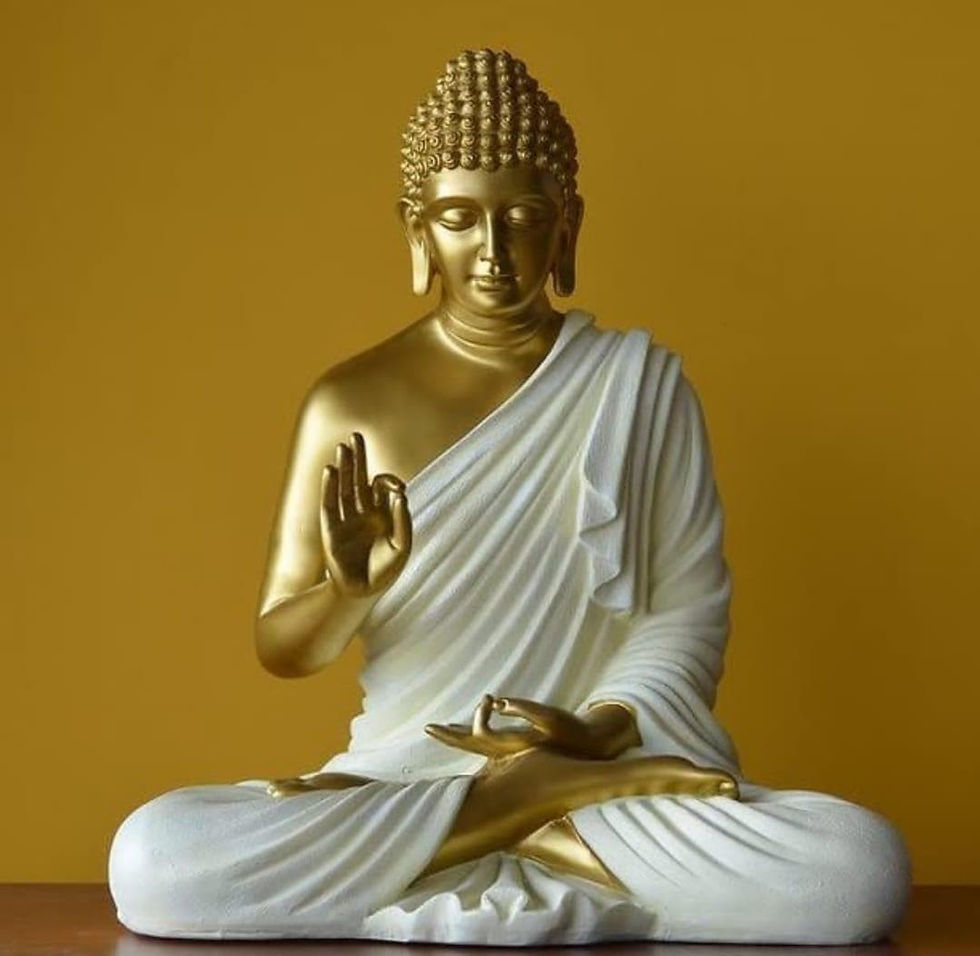
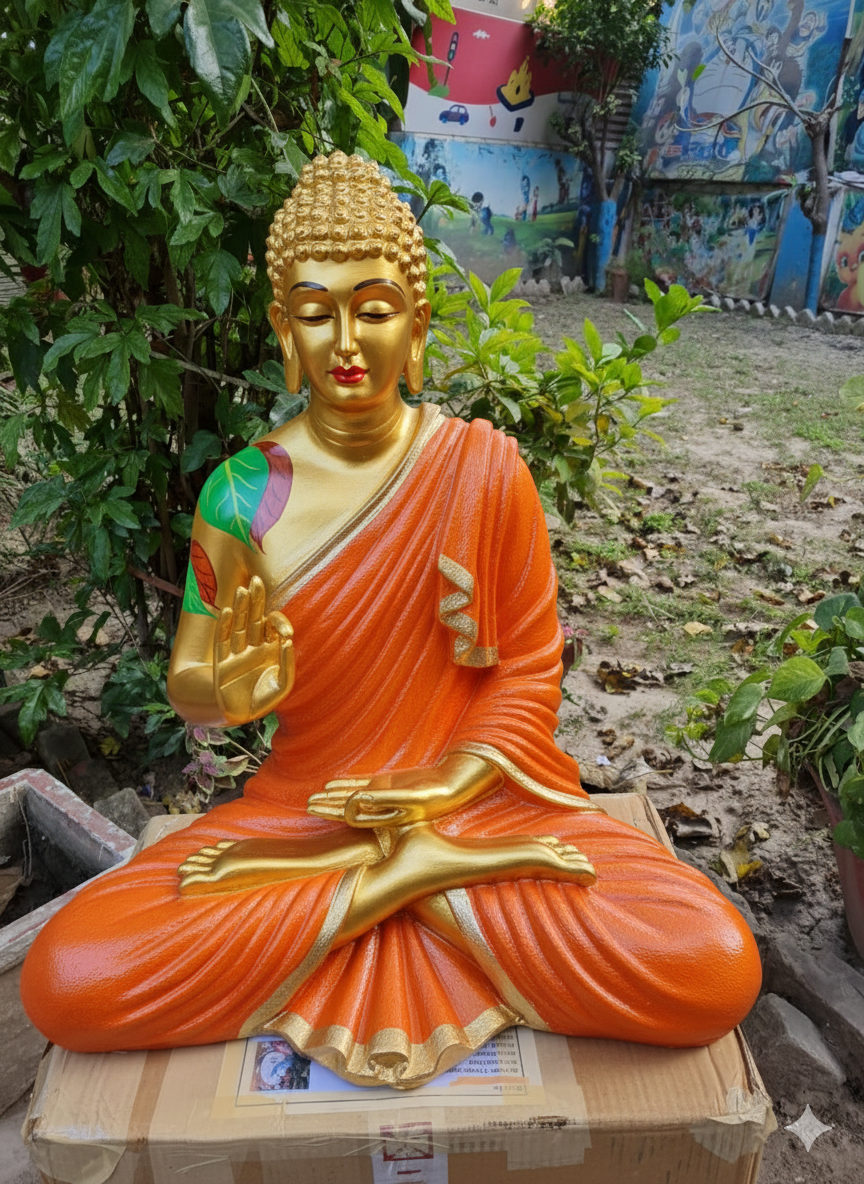
Handcrafted Meditating Buddha Statue
Handcrafted
Thoughtfully crafted with fine detailing
Serene Design
Designed to evoke calm and positive energy
Durable Finish
Made using high-quality materials
Versatile Decor
Perfect for Every Space
Our Buddha Statues blend timeless artistry with spiritual elegance, helping you create tranquil spaces that inspire mindfulness, peace, and harmony.
Upgrade your home with Phooldaan's Buddha Statues!
Buy Meditating Buddha Statue Online from Phooldaan






Why Buddha Statues Belong in Every Space
Create calm, mindful environments with Phooldaan’s curated Buddha Statue collection, designed for homes, offices, meditation corners, and gardens. Each statue is thoughtfully crafted to bring balance, serenity, and timeless aesthetic appeal—making them perfect for modern living spaces seeking peace and positivity.

Meditative Buddha Statues
Ideal for calm corners

Handcrafted Buddha Statues
Crafted with detail

Peaceful Home Decor
Enhance positive energy

Indoor & Outdoor Buddha Statues
Versatile placement
Buddha Statues that Bring Calm
Transform your space with Buddha statues designed to create peace, mindfulness, and visual harmony. Whether placed in living rooms, meditation corners, workspaces, balconies, or gardens, our Buddha statues help cultivate a sense of stillness and positive energy in everyday life.
Thoughtfully crafted for modern homes, each statue blends spiritual symbolism with refined aesthetics. From serene meditative poses to elegant handcrafted finishes, these pieces are more than decor—they’re gentle reminders to slow down, breathe, and reconnect. Ideal for both first-time buyers and seasoned collectors, our Buddha statues elevate interiors with meaning and grace.
Buddha Statues for Every Space
Modern living spaces are often filled with noise, visual clutter, and constant movement. Buddha statues help restore balance by introducing stillness, mindfulness, and a sense of calm into everyday environments. Each space has a different purpose, which is why Phooldaan offers Buddha statues in a variety of styles, sizes, and finishes—making it easy to find the right piece for your home, workspace, or outdoor area.

Living Rooms
Statement pieces for serene interiors

Bedrooms
Peaceful presence for restful spaces

Home - Offices
Calm that improves focus

Balconies and Corners
Quiet moments in everyday spaces

Benefits You'll Experience with Buddha Statues
Calm and Mindfulness
Create peaceful surroundings that encourage relaxation, meditation, and emotional balance in everyday spaces.
Positive Energy
Buddha statues are believed to promote harmony, clarity, and a sense of well-being in homes and workspaces.
Timeless Aesthetic
Thoughtfully crafted designs add elegance and serenity, blending spiritual meaning with modern décor.
Low-Maintenance Decor
No upkeep, no effort—just lasting beauty and calm that enhances your space effortlessly.
Meditating Buddha Statue
Introduction
A Meditating Buddha Statue represents calmness, mindfulness, and spiritual awareness. Often shown seated with crossed legs and hands resting in the lap, this posture reflects deep meditation and inner peace. Many people choose a meditation Buddha statue for their homes, offices, and meditation spaces because it creates a soothing atmosphere while serving as a reminder to stay centered and present.
Meditating Buddha statue for Home
Integrating a meditating Buddha statue into a home serves as a purposeful way to anchor the living space with themes of mental clarity, emotional grounding, and daily mindfulness. To preserve the sacred nature and decorative harmony of the statue, it should be placed in a clean, clutter-free environment and elevated on a shelf, mantle, or console table so that it rests at or above eye level. The living room, a dedicated meditation corner, or a home office are ideal locations, especially when the statue is positioned facing the main entrance to greet incoming energy with a sense of calm, or facing east to align with traditional symbols of spiritual awakening and new beginnings. Selecting the right material allows the statue to complement both the physical and energetic needs of the household; stone options offer an organic, weather-resistant permanence perfect for outdoor patios or garden altars, while lightweight resin provides an affordable, highly detailed alternative for delicate indoor shelving. Heavy brass or bronze statues bring a classic, heirloom-quality warmth to central communal spaces, whereas contemporary minimalist designs use clean lines and neutral tones to infuse modern, urban interiors with quiet tranquility. To maintain a respectful environment, the statue must never be placed directly on the floor or located in low-energy or highly private rooms such as bathrooms, kitchens, or laundry areas, ensuring its presence remains a pure, uninterrupted visual reminder to slow down, breathe, and remain grounded in the present moment.
Best Places to Keep a Meditating Buddha Statue
3. Choosing the Right Material for Durability
The best places to keep a meditating Buddha statue are elevated spaces in the living room, a home office, a dedicated meditation corner, or an outdoor garden, where the statue can effectively cultivate a peaceful environment. To align with ancient feng shui and vastu principles, the statue should ideally be placed facing east toward the rising sun to welcome spiritual awakening and new beginnings, or positioned facing the main entrance of the home to greet incoming energy and transform it into a sense of calm. Elevating the statue on a sturdy table, shelf, altar, or mantelpiece ensures it sits at or above eye level, which serves as a visual mark of respect and forces the viewer to look upward toward the symbol of tranquility. Outside the main living areas, a quiet study desk or home office is an excellent location, as the Buddha's meditative pose helps reduce stress, sharpens mental focus, and maintains emotional balance during busy work hours. For outdoor environments, placing a durable stone Buddha among lush green foliage or near a water feature on a patio creates a serene zen garden that anchors the property with grounded, natural energy. To prevent disrupting the harmony of the home, the statue must be kept out of low-energy, highly chaotic, or strictly private zones, meaning it should never be placed directly on the floor, inside a bathroom, near a kitchen stove, or in a laundry room, ensuring the surrounding space remains clean, clutter-free, and purely dedicated to mindfulness.
Where to keep meditating Buddha statue at home?
To maximize the positive energy and spiritual benefits of a meditating Buddha statue at home, it should ideally be placed in a quiet, clean, and respectful location facing east toward the rising sun, which symbolizes spiritual awakening and fresh beginnings. The most auspicious areas for placement include a dedicated meditation room, a quiet yoga corner, or the living room, where the statue should be elevated on a pedestal, side table, shelf, or mantelpiece so that it sits at or above eye level when you are standing. Keeping the Buddha elevated shows proper spiritual respect and ensures that you look up toward the symbol of peace, rather than down upon it. For those looking to create a calming first impression, placing the statue near the main entryway facing inward is highly beneficial, as it visually anchors the home and immediately invites tranquility into the living space. Conversely, there are several strict boundaries regarding placement to avoid disrupting the home's harmony; the statue should never be placed directly on the floor, nor should it ever be kept in a bathroom, kitchen, laundry room, or master bedroom, as these spaces are associated with mundane daily chores, waste, or private energy that conflicts with the Buddha's sacred nature of purity and mental stillness. Finally, ensuring the area surrounding the statue remains entirely clutter-free allows the flowing energy, or chi, to circulate unimpeded, transforming the space into a true sanctuary for mindfulness and stress relief.
1. The Traditional Dhyana Buddha statue represents the ultimate state of mental clarity, inner peace, and spiritual immersion. Rooted deeply in Buddhist iconography, this specific depiction captures the historical Buddha, Siddhartha Gautama, at the precise moment he achieved enlightenment under the Bodhi tree.
The defining characteristic of this statue is the Dhyana Mudra (the meditation hand gesture). As shown in the visual, the Buddha is seated in a full or half-lotus pose with both hands resting gently in his lap. The palms face upward, with the right hand resting flat on top of the left, and the thumbs lightly touching tips to form a perfect, continuous circle of flowing energy.
This specific alignment of the hands symbolizes a complete balance of thought, the quieting of the mind, and the mastery of the physical senses. Beyond the hands, the half-closed eyes signify a dual awareness—looking inward to explore the spiritual self while remaining softly connected to the external world. Bringing a Dhyana Buddha into a space instantly signals a zone of quiet reflection, making it an essential anchor for anyone practicing mindfulness, meditation, or yoga.
2. The Stone Meditating Buddha connects spiritual practice with the raw, grounded elements of nature. Traditionally hand-carved from solid natural stones like sandstone, granite, volcanic rock, or marble, these statues possess a raw organic weight and structural permanence that synthetic materials simply cannot replicate.As seen in outdoor garden designs, stone statues naturally blend into landscape environments. They look completely at home tucked amidst green foliage, resting on river rocks, or placed beside water features.
The primary advantage of choosing natural stone is its incredible resilience. A stone Buddha is entirely weather-resistant, capable of enduring rain, intense sunlight, and freezing temperatures without degrading. Over time, outdoor stone statues develop a beautiful, weathered patina, occasionally collecting moss or lichen. This aging process does not ruin the statue; instead, it deepens its spiritual meaning, serving as a visual metaphor for impermanence, resilience, and standing still amidst the changing seasons of life.
3. The Resin Meditating Buddha is a versatile choice that bridges the gap between ancient spirituality and modern interior design. Made from high-density synthetic polyresin, these statues are liquid-cast into precise molds, allowing artisans to capture incredibly intricate details—from the fine, textured folds of the Buddha's robes to the delicate curls of hair—that would require weeks of intense labor to chisel into stone or wood.
The defining advantage of a resin statue is that it is exceptionally lightweight and durable. Unlike heavy stone or fragile ceramic, a resin Buddha can be effortlessly moved from room to room, making it an excellent option for renters or anyone who likes to occasionally refresh their decor. Because they weigh so little, they can be safely displayed on floating shelves, delicate glass consoles, or higher wall ledges where a heavy stone alternative would create a safety hazard.
Furthermore, resin is incredibly adaptable to different artistic styles. Because the material takes pigments and faux finishes exceptionally well, a resin statue can be engineered to look exactly like aged bronze, polished marble, or carved wood. This adaptability makes it highly budget-friendly and a seamless addition to contemporary apartments, bedrooms, and workspace desks.
4. The Brass Meditating Buddha statue brings an aura of timeless elegance, rich cultural heritage, and heirloom quality to a space. Forged from an alloy of copper and zinc, metalwork statues have been central to sacred Asian art for centuries, valued for their durability and radiant, light-catching presence.
The hallmark of a brass Buddha is the exceptional precision of its craftsmanship. Because metal can be finely engraved and polished, these statues showcase stunning textures—from the subtle engraving on the lotus base to the highly stylized, polished contours of the face and robes. Many brass statues utilize a contrasting antique or dual-tone finish, combining darker, oxidized low-lights with bright, polished metallic highlights that capture ambient light beautifully.
Beyond its striking aesthetic, a brass statue carries a satisfying physical weight and permanence, anchoring the room it sits in. In many spiritual traditions, metallic elements like brass are believed to clear stagnant energy and invite clarity. Their upscale, classic appearance makes them perfect focal pieces for prominent areas in a home, such as living room mantels, entry tables, study desks, or corporate office spaces.
5. Contemporary Buddha Designs re-imagine sacred traditional iconography through a lens of modern minimalism. Instead of relying on the heavy, ornate details traditionally found in temple artifacts, these pieces utilize clean lines, geometric silhouettes, and abstract forms. They are carefully designed to respect the ancient spiritual essence of the Buddha while seamlessly integrating into modern home trends.
The hallmark of contemporary design is a focus on raw form and simplicity. Many of these statues feature smooth, uncarved faces or abstract shapes that subtly suggest the meditative pose without explicitly detailing it. Rather than traditional gold or bronze leaf, contemporary pieces often feature neutral color palettes, including:
-
Matte black
-
Stark white
-
Concrete grey
-
Muted earth tones
Artisans frequently use unexpected, raw textures like unpolished concrete, frosted glass, or industrial metals to create these pieces.
By stripping away excess ornamentation, contemporary Buddha designs capture the core internal concept of Buddhism—silence, emptiness, and tranquility. This understated elegance makes them exceptionally well-suited for industrial lofts, Scandinavian-style rooms, urban apartments, or corporate workspaces where a highly traditional artifact might clash with the surrounding architectural style.
What does the meditating Buddha statue mean
A meditating Buddha statue serves as a profound visual symbol of inner peace, absolute mindfulness, and emotional balance, capturing the historical Buddha, Siddhartha Gautama, in the exact state of deep concentration under the Bodhi tree where he attained supreme enlightenment. The core meaning of the statue is explicitly conveyed through its body posture and hand gestures, specifically the Dhyana Mudra, where the Buddha sits in a stable full or half-lotus position with hands folded neatly in the lap, palms facing upward to represent the total containment and perfect circulation of spiritual energy. This physical stillness serves as a living metaphor for conquering internal chaos, signifying that true strength and clarity come from quieting the mind rather than reacting to external stressors. Furthermore, the statue's softly closed or half-open eyes illustrate a balance of consciousness, demonstrating how to look deeply inward for self-reflection while remaining gently aware of the outside world. Ultimately, placing a meditating Buddha in a space is a deliberate act of setting an intention for tranquility, reminding individuals to ground themselves in the present moment, master their physical senses, and cultivate a sanctuary of mental stillness amidst the busy routines of daily life.
What are the 5 meditating Buddhas?
In Vajrayana (Tantric) Buddhism, the Five Meditating Buddhas—properly known as the Five Dhyani Buddhas or the Wisdom Buddhas—are not historical figures like Siddhartha Gautama. Instead, they are abstract spiritual beings who represent different aspects of divine consciousness, cosmic healing, and the transformation of negative human emotions into pure wisdom.
In traditional sacred art like Thangka paintings and mandalas, each Buddha is assigned a specific direction, color, mudra (hand gesture), and elemental association.
1. Vairochana (The Illuminator)
-
The Position: Center of the Mandala
-
Color & Element: White | Space/Ether
-
Mudra: Dharmachakra Mudra (Turning the Wheel of Law) – Hands held near the chest with thumbs and index fingers touching to form wheels.
-
The Transformation: He transforms the poison of ignorance and delusion into the *Wisdom of the All-Encompassing Dharma Realm*. He represents the primordial source of all reality.
2. Akshobhya (The Immovable One)
-
The Position: East
-
Color & Element: Blue | Water
-
Mudra: Bhumisparsha Mudra (Earth Witness) – The left hand rests flat in the lap, while the right hand reaches down over the knee to touch the ground.
-
The Transformation: He transforms the poison of anger, hatred, and aggression into *Mirror-like Wisdom*—the ability to see things exactly as they are without distortion, perfectly calm and clear like undisturbed water.
3. Ratnasambhava (The Jewel-Born One)
-
The Position: South
-
Color & Element: Yellow/Gold | Earth
-
Mudra: Varada Mudra (Charity/Generosity) – The right hand is extended downward over the knee, palm facing outward to symbolize the offering of gifts and compassion.
-
The Transformation: He transforms the poison of pride and ego into the *Wisdom of Equality*, reminding us that all living beings share the same fundamental worth and ultimate value.
4. Amitabha (Infinite Light)
-
The Position: West
-
Color & Element: Red | Fire
-
Mudra: Dhyana Mudra (Meditation) – Both hands rest gently in the lap, right on top of left, palms up, with thumbs lightly touching. He is the most famous archetype of pure meditation.
-
The Transformation: He transforms the poison of selfish desire, attachment, and greed into *Discriminating Wisdom*, allowing us to appreciate individuality with deep insight rather than a desperate urge to possess it.
5. Amoghasiddhi (Almighty Conqueror)
-
The Position: North
-
Color & Element: Green | Air/Wind
-
Mudra: Abhaya Mudra (Fearlessness) – The right hand is raised to shoulder height with the arm bent, palm facing outward as a protective shield.
-
The Transformation: He transforms the poison of envy, jealousy, and fear into the *All-Accomplishing Wisdom*. This gives practitioners the courage, willpower, and practical focus to complete their spiritual path without being paralyzed by insecurity.
How to Choose an Authentic Meditating Buddha Statue
Choosing an authentic meditating Buddha statue requires a careful evaluation of traditional iconography, artisan craftsmanship, and spiritual intent rather than selecting a mass-produced novelty piece. To ensure authenticity, look for a statue that accurately depicts the correct body proportions and sacred hand gestures, such as the Dhyana Mudra, where the hands are perfectly balanced in the lap with palms facing upward to signify deep concentration. Authentic statues are typically created by skilled artisans using traditional, long-lasting materials like hand-carved natural stone, solid brass, or high-quality bronze, rather than cheap, poorly molded plastics that lack artistic depth and weight. Examining the facial expression is also critical; an authentic meditating Buddha should radiate an aura of profound tranquility and equanimity, characterized by softly closed or downward-cast eyes that reflect an inward journey of self-reflection and absolute mindfulness. Finally, sourcing the statue from reputable regions or creators who respect Buddhist traditions ensures that the piece carries genuine cultural heritage, transforming the statue from a mere decorative item into a respectful, powerful anchor for your home's peaceful energy.
When it comes to attracting wealth, financial success, and abundance, the Laughing Buddha—traditionally known as Budai or Hotei—is universally recognized as the ultimate symbol of good luck and money. Based on a historical wandering Chinese monk, this joyful, pot-bellied figure is celebrated for his contentment and open-handed generosity, serving as a powerful visual anchor for a prosperity-focused mindset. To specifically target financial growth, certain variations of the Laughing Buddha are highly recommended: the statue depicting him holding a gold ingot aloft or sitting on a mountain of gold coins directly represents immense fortune, while the Buddha carrying a cloth money bag or sack over his shoulder signifies the gathering of wealth and the containment of life's troubles. Another exceptionally auspicious variation is the Laughing Buddha riding a money frog (three-legged toad), which is believed to compound career luck, protect investments, and accelerate business success. According to Vastu and Feng Shui principles, to maximize these financial benefits, the statue should be placed in the southeast corner of the home or office—the designated wealth sector—or positioned near the main entryway facing inward to welcome a continuous flow of abundance into your living space