
5 Simple Things That Make a Home Feel Better

Small, deliberate changes that shift the whole mood of a space
Most homes do not need a renovation to feel better. They need a handful of deliberate choices repeated in the right places. The homes that feel calm, alive, and cared for usually share a small set of habits rather than an expensive design overhaul. Below are five things that consistently change how a home feels, from the air inside it to the mood of the people living in it. Two of them, a Buddha statue and an aeroponic tower garden, are easy to bring in this week. The other three cost little to nothing but attention.
1. Keep Fresh Flowers or Blooms Somewhere Visible
A room with fresh flowers reads as cared for the moment you walk in, even if nothing else about it has changed. A small vase of seasonal blooms on a dining table, a single stem beside the Buddha statue, or a cut flower from your own tower garden does more for a room's atmosphere than most people expect from something so small and short lived.
The effect is partly visual, since flowers add color and shape that most furniture cannot, and partly emotional, since fresh flowers are one of the few home details that clearly signal ongoing attention rather than a one time decorating decision. Replacing them every few days, rather than letting an arrangement sit until it wilts, is what keeps this effect working, and it becomes an easy habit once a vase has a fixed spot to return to.
2. Grow Your Own Greens With an Aeroponic Tower Garden
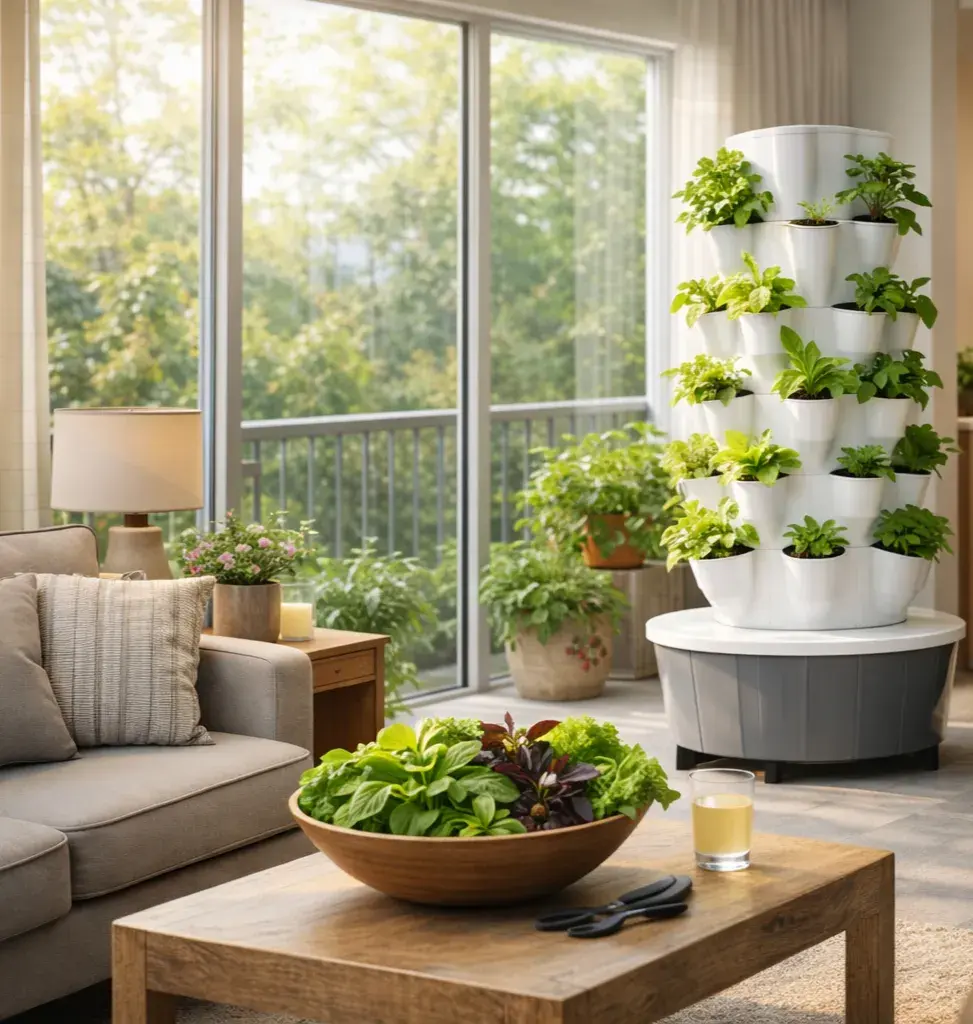
Few single additions change a home as quickly as living, growing plants, and an aeroponic tower garden delivers that change without the mess or the guesswork soil usually demands. A tower like the Phooldaan Nova or Lotus range sits comfortably on a balcony, terrace, or bright indoor corner, growing herbs, lettuce, and leafy greens using a fine mist of nutrient rich water instead of soil.
The benefit is not only fresh food, though harvesting your own basil or spinach a few steps from the kitchen is reason enough. A tower full of healthy, upright greens becomes a genuine focal point in a room, softening hard corners and adding real color that changes through the seasons. It also brings a home closer to the plants that feed it, which tends to shift how people treat the rest of their diet and daily habits without any conscious effort.
Because an aeroponic tower uses a closed water system, it also uses a fraction of the water a soil garden of the same size would need, which matters in cities where water can be scarce or expensive. A tower that starts as a kitchen herb experiment often becomes the busiest, most visited corner of the home within a few weeks.

3. Add a Buddha Statue Somewhere You Actually Look
A Buddha statue works because it asks nothing of the person walking past it, yet it consistently offers something back. Its closed or half closed eyes, relaxed shoulders, and still hands are visual shorthand for calm, and every glance at it, even a brief one during a busy morning, tends to soften the body slightly.
The placement matters more than the material or size. A statue tucked away in a rarely used room does very little. A statue placed on a shelf near the front door, on a work desk, or beside a favorite chair becomes part of the rhythm of the day, a small checkpoint that invites a slower breath before the next task. Many Vastu and Feng Shui traditions also treat the Buddha statue as a symbol of peace and positive energy for the living room, study, or entryway, which lines up neatly with this everyday, practical reasoning.
A brass or stone Buddha statue also pairs naturally with greenery, so placing one beside an aeroponic tower on a balcony or in a garden corner is one of the simplest ways to turn an unused space into the calmest part of the home.
4. Let More Natural Light Reach the Room You Use Most
Light shapes mood more than almost any other single factor in a home, yet it is often the last thing anyone adjusts. Heavy curtains, furniture blocking a window, or a lamp with a dim, warm bulb in the one room a family actually spends its evenings in can quietly drag the mood of that entire space down.
A simple fix is to identify the one room used most during the day, usually the living room or kitchen, and make sure at least one window there is genuinely unobstructed during daylight hours. Swapping heavy drapes for a lighter fabric, moving a tall shelf away from a window, or trimming an overgrown balcony plant that blocks the glass can bring in noticeably more light without spending anything. In the evening, replacing a single harsh overhead bulb with a warmer, softer lamp near a reading chair or the Buddha statue corner tends to have an outsized effect on how relaxed the space feels once the sun goes down.
5. Keep One Corner Completely Clutter Free
Not every corner of a home needs to be tidy at all times, that standard is rarely realistic and even less enjoyable to maintain. What actually changes how a home feels is having at least one small area that stays clear, no matter how busy the rest of the week gets.
This could be a windowsill, a console table by the entrance, or the exact spot where a Buddha statue and an aeroponic tower sit together. The rule is simple, nothing gets set down there except the objects that belong, no mail, no keys, no half finished cups of tea. Over time, that one reliably clear spot becomes a visual anchor for the whole home, a reminder that calm and order are possible even on the days everything else feels scattered.
Bringing All Five Together
These five changes reinforce each other more than they might seem to at first glance. A well lit room makes a growing aeroponic tower look better and grow better. A clutter free corner gives a Buddha statue the quiet space it needs to actually be noticed. Fresh flowers pull the eye toward whichever corner they sit in, so placing them near the statue or the tower draws attention to both at once. None of this requires a full renovation or a large budget, and most of it can be done over a single weekend. What it asks for instead is a bit of intention about where things sit and how often you actually look at them, which, in the end, is most of what makes a home feel like home.


Comments