
Buddha Statue for Navratri: Bringing Stillness Into a Season of Celebration

Navratri fills our homes with color, chanting, dance and nine nights of devotion to the divine feminine. Amid all that joyful motion, many homes are also turning to a quieter companion for the same season: a Buddha statue. It may seem like an unlikely pairing at first glance, a festival built around Shakti's fierce and radiant energy sitting beside an icon of calm and detachment. Yet once you look closer, the two complement each other beautifully. This guide explores why a Buddha statue finds a natural place in your Navratri decor, where to position it according to Vastu and Feng Shui, which statue style suits the occasion, and how pairing it with living greenery from an aeroponic tower can turn a festive corner into a year round sanctuary.
Understanding the Spirit of Navratri
Navratri literally means nine nights. Across these nine nights, households across India honor the nine forms of Goddess Durga, each representing a different quality: courage, wisdom, prosperity, protection and grace among them. Homes are cleaned and decorated, lamps are lit each evening, and many families observe fasting and prayer rituals that build toward Vijayadashami, the day that marks the triumph of good over evil.
What often gets missed in the excitement of garba nights and festive shopping is that Navratri is, at its root, an inward journey as much as an outward celebration. The nine nights are traditionally seen as a period of purification, a chance to still the mind before the year's next chapter begins. This is precisely where a Buddha statue steps in with quiet relevance.
Why a Buddha Statue Belongs in Your Navratri Setup
A Buddha statue is not a religious contradiction within a Navratri altar or living room display. In most Indian homes, it is treated as a symbol of peace, mindfulness and good fortune rather than as an object tied strictly to Buddhist worship. Placed thoughtfully, it becomes a visual counterbalance to the energetic pulse of the festival.
A Grounding Presence Amid the Festivities
Navratri evenings are loud, bright and joyfully chaotic in the best way. A Buddha statue offers the home a still point, a corner the eye and mind can rest on between one ritual and the next. Many families place it near the puja area or in the living room specifically so that guests moving through a busy festive house have somewhere calm to pause.
Symbolic Harmony Between Shakti and Shanti
Durga represents Shakti, the active, protective and transformative force of the universe. The Buddha represents Shanti, stillness, equanimity and release from restlessness. Traditional Indian homes have long balanced these two energies, worshipping powerful deities while keeping symbols of peace close by as a reminder that strength and serenity are not opposites but partners. A Buddha statue during Navratri quietly reinforces that balance.
A Fresh Start for the Home
Navratri is also associated with new beginnings, whether that means starting a business, moving into a new home, or simply resetting one's daily habits. A Buddha statue, especially one added to the home during this period, is often seen as an invitation for clarity and good intention to take root alongside the festival's own themes of renewal.
Where to Place Your Buddha Statue During Navratri
Placement matters as much as the statue itself, both by Vastu Shastra and by Feng Shui, two traditions that agree more often than people expect when it comes to Buddha statues.

The Northeast Corner
The northeast, known as the Ishaan corner in Vastu, is considered the most auspicious direction for spiritual objects. If your Navratri puja setup already occupies this corner, placing a small Buddha statue nearby, rather than directly on the altar meant for Durga, keeps the energy layered without competing.
The Entrance or Living Room
A Buddha statue facing the main door, seated in a calm meditative pose, is a popular Feng Shui choice throughout the year and works especially well during Navratri, when the front of the house sees constant footfall from guests, deliveries and family gatherings. It sets a tone of welcome and calm right at the threshold.
A Garden Corner or Balcony Nook
For homes with a balcony garden or terrace, a Buddha statue tucked among plants creates one of the most photographed and most loved corners in Indian home decor. During Navratri, this spot doubles as a quiet retreat from the noise of nine nights of celebration, a place for morning tea or a short meditation before the evening's aarti.
Where to Avoid
Avoid placing the statue on the floor directly. It should always rest on a raised platform, table or dedicated shelf.
Avoid bathrooms, utility areas or spaces directly beneath a staircase.
Avoid facing the statue toward a bed, since bedrooms are considered too active an energy for a meditative Buddha.
Avoid cluttering the statue's surroundings with unrelated decor items during the festival rush; give it breathing room.
Choosing the Right Buddha Statue for the Occasion
Phooldaan's Buddha statue collection spans several materials and postures, and Navratri is a good moment to pick one that matches both your home's existing decor and the intention you want to carry into the festival.
Material Considerations
Brass statues carry a traditional, temple like warmth and pair naturally with the brass diyas and thalis already out for Navratri puja.
Marble statues bring a cool, polished elegance and photograph beautifully against festive string lighting.
Resin statues are lightweight and budget friendly, ideal if you are decorating a rented home or a temporary festive setup.
Stone statues suit outdoor garden corners and balconies, standing up well to Mumbai's humidity and monsoon aftermath that often lingers into early Navratri.
Posture and Mudra for a Festive Home
A seated Buddha in the Dhyana mudra, hands resting in the lap in meditation, is the most fitting choice for Navratri, since it reflects the introspective side of the festival. Alternatively, a Buddha in the Abhaya mudra, palm raised outward in a gesture of fearlessness and protection, mirrors Durga's own protective symbolism and works well for homes that want the statue to echo the festival's theme of overcoming fear and negativity.
Size for the Space
A tabletop statue between six and twelve inches suits most puja corners and entrance consoles. Larger statues, from eighteen inches upward, work best in a dedicated garden nook where there is room for the piece to be a focal point rather than a crowded addition.\

Pairing a Buddha Statue with Greenery
One of the most enduring images in Indian home decor is a Buddha statue surrounded by lush, trailing plants. Living greenery softens the statue's stillness and adds a sense of life and growth that mirrors Navratri's own themes of renewal. The challenge for most urban households, particularly in a city like Mumbai where balcony space is limited and soil gardening can get messy, is keeping that greenery looking full and healthy through the festival season and beyond.
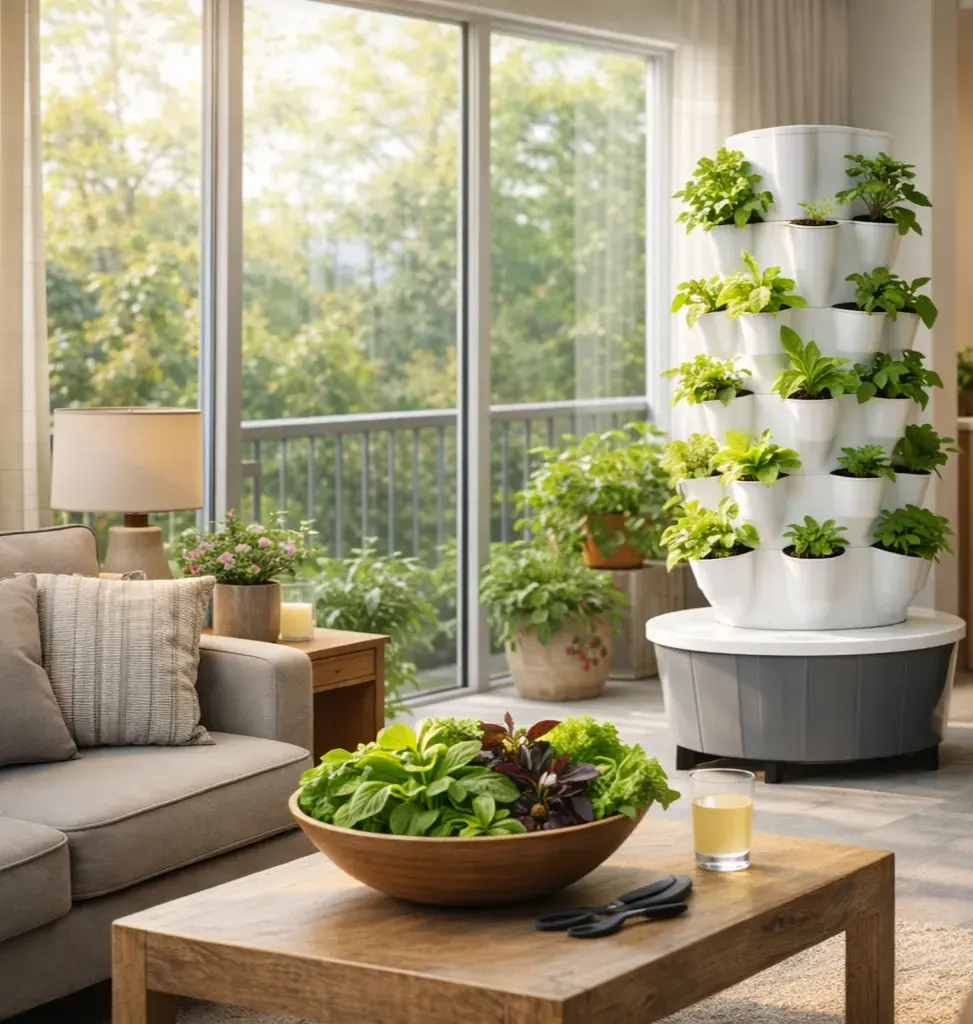
This is where an aeroponic tower changes the equation. Phooldaan's compact towers, such as the Nova 20 for tight balcony corners or the Nova 35 for a slightly larger footprint, let you grow trailing vines, ferns and flowering plants around the base of a Buddha statue without soil, without daily watering cans, and without the root rot that so often ruins soil planters left unattended during a busy festival week.
Caring for the Statue Through the Festival
A Buddha statue that anchors your Navratri decor deserves the same attention as the rest of your puja setup.
Dust brass and stone statues daily during the festival using a soft, dry cloth, since incense and diya smoke settle quickly.
Wipe marble and resin statues with a barely damp cloth, avoiding direct contact with rangoli colors or oil residue.
Keep the statue away from direct exposure to fire from diyas or lamps placed too close during evening rituals.
If the statue sits near your aeroponic tower, check occasionally that the nutrient reservoir mist has not drifted onto the surface, particularly for resin pieces.
A Buddha Statue as a Navratri Gift
Navratri, much like Diwali, has become a season of thoughtful gifting between family and friends. A well chosen Buddha statue makes a graceful gift for a housewarming, a new business launch, or simply a gesture of goodwill during the festival. A medium brass statue in the Dhyana mudra, paired with a small potted plant or a compact Nova 20 tower, has become one of Phooldaan's most requested festive gift bundles, since it gives the receiver both a symbol of peace and a living, growing element to nurture long after the nine nights are over.
Matching the Statue With Navratri's Nine Colors
Each of the nine nights of Navratri is traditionally associated with a specific color, worn by devotees and often reflected in home decor, from the deep grey of the first night to the radiant pink of the ninth. Rather than changing your Buddha statue's setting daily, most homes choose one flexible backdrop that can carry each color through small, changeable accents.
Use a plain neutral cloth, in white, cream or light terracotta, as the statue's base runner so any color of flowers or lights placed beside it stands out clearly.
Rotate small votive candles or LED tea lights in the day's designated color rather than repainting or redressing the statue itself.
Let the surrounding greenery from your aeroponic tower stay a constant, calming green throughout, so it anchors the display even as accent colors shift night to night.
This approach keeps the Buddha statue's own presence steady and unchanging, which is really the point. Its stillness is the counterweight to nine nights of shifting color, sound and ritual, and that contrast is part of what makes the pairing work so well.
A Short History of the Buddha Statue in Indian Homes
Long before Buddha statues became a mainstream home decor choice, they held deep religious significance across regions of India where Buddhism flourished, from Bodh Gaya to Sarnath and Sanchi. Over the centuries, as trade and travel carried Buddhist art across South and Southeast Asia, the image of the seated, meditating Buddha became recognized far beyond its original religious context as a universal symbol of peace.
Today, in cities like Mumbai, Delhi and Bengaluru, it is common to see a Buddha statue placed in homes that otherwise follow Hindu, Jain, Sikh or entirely secular household traditions. Interior designers frequently recommend it precisely because it carries this dual identity: deeply meaningful to those who follow it as a spiritual figure, and broadly welcomed by anyone simply seeking a visual anchor of calm. Navratri, a festival that already blends regional customs, Puranic legend and modern celebration, is a fitting stage for that same open, layered symbolism.
Bringing It All Together
Navratri and the Buddha statue may come from different traditions, but the values they carry, protection, renewal, stillness and strength, sit comfortably side by side in an Indian home. Whether you place your statue in the northeast corner of your puja room, at the entrance to greet guests, or nestled among the trailing greenery of an aeroponic tower on your balcony, the goal remains the same: to give your home a corner of calm to return to across nine nights of celebration and every ordinary day that follows.
Frequently Asked Questions (FAQs)
Is it acceptable to keep a Buddha statue during a Hindu festival like Navratri?
Yes. In Indian homes, a Buddha statue is widely treated as a symbol of peace and good fortune rather than an object exclusive to Buddhist worship. It is commonly displayed alongside Hindu deities and festive decor, including during Navratri, without any conflict.
Which direction should a Buddha statue face during Navratri celebrations?
The northeast corner of the home is considered most auspicious in Vastu Shastra, while Feng Shui favors a position facing the main entrance. Both traditions agree that the statue should sit on a raised platform rather than directly on the floor.
Can I place a Buddha statue near my Durga puja altar?
It is best to place the Buddha statue nearby rather than on the same platform as the Durga idol or kalash. A separate shelf, console table or garden corner a short distance away keeps the two symbols distinct while still sharing the same festive space.
What is the best plant pairing for a Buddha statue during Navratri?
Trailing plants such as money plant, pothos or ferns work beautifully around a Buddha statue. Growing them in a compact aeroponic tower like the Nova 20 keeps the display soil free and tidy throughout the festival, which matters when the corner sees daily diyas, rangoli and visiting guests.
What size and material of Buddha statue suits a small Mumbai balcony?
For a compact balcony, a resin or stone statue between six and twelve inches works well, since it is lightweight, weather resistant and easy to reposition. Pairing it with a Nova 20 or Nova 35 tower keeps the overall footprint small while still building a full, green display without taking up floor space that a soil planter would otherwise demand.


Comments