
Can Aeroponic Farming Become a Profitable Side Business?

Updated: Jul 27

Aeroponic farming business has quietly moved from laboratory greenhouses into living rooms, balconies, and small urban plots with many people in India starting to notice the income potential. With land growing scarcer and food prices rising, a controlled soilless farming setup can be the smartest small-scale Agri business decision you make this year. Phooldaan has been at the center of this shift, supplying aeroponic tower systems to home growers, urban farmers, and entrepreneurs across India who want reliable side income farming without the risk of conventional agriculture.
What Is Aeroponic Farming and Why Is It a Business Opportunity?
Aeroponics is a method of growing plants without soil. Instead of roots sitting in water (like hydroponics) or earth, plant roots hang in the air and are misted with a fine nutrient solution at regular intervals. Because roots absorb oxygen freely, plants grow up to 3 times faster than in traditional soil farming. The system uses up to 98% less water and almost no land.
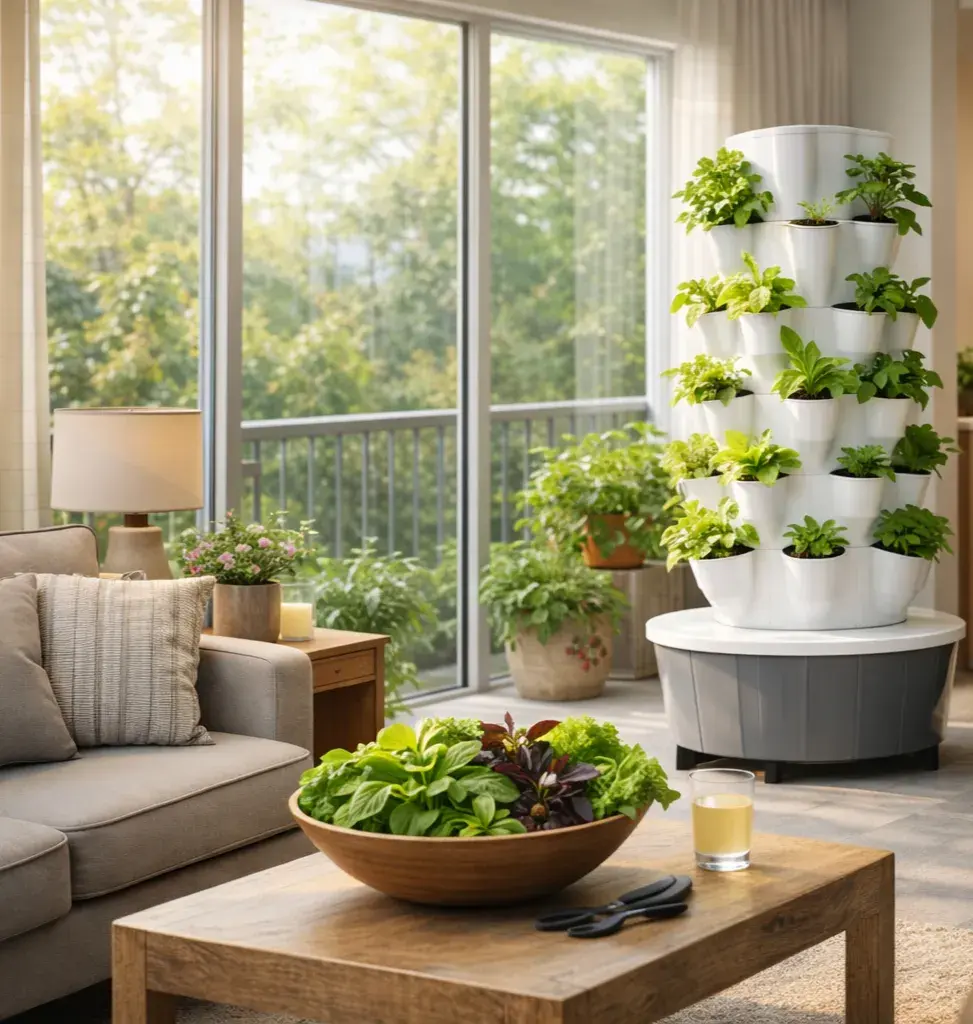
For anyone looking at side income farming, that efficiency is the selling point. You do not need an acre of land. A single Phooldaan Nova 40 aeroponic tower, for example, can hold 40 plant sites in a footprint smaller than a dining table. Stack two or three towers and you have a small but productive indoor farm running on your terrace, balcony, or spare room — all while you keep your day job.
98% less water than soil farming | 3x plant growth rate | 365 days- grows every season | 30 acres of land required |
What Is the Investment Required to Start an Aeroponic Farming Business in India?

One of the first questions people ask is: is aeroponic farming profitable after you factor in the setup cost? The honest answer is yes, when you start right.
A beginner setup with Phooldaan typically involves one or two aeroponic towers (such as the Nova 20 or Lotus 30), a nutrient starter kit, and grow lights if you are farming indoors without sufficient sunlight. Depending on the tower model and configuration, an entry-level setup in India starts from approximately ₹8,000–₹15,000. A mid-scale setup with four to six towers that can generate consistent produce for sale runs between ₹25,000–₹60,000.
Tip: Unlike large hydroponic farms, aeroponic towers are modular. You can start small with one tower, learn the system, and add more units as your crop profitability grows — without rebuilding your entire setup.
Ongoing costs include electricity (modest as the pump and lights draw about as much as a ceiling fan), nutrients, and seeds. Most growers find that monthly operating costs for a 4-tower setup stay well under ₹2,000.
Most Profitable Vertical Farming Crops You Can Grow with Aeroponics
Choosing the right crop is what separates a hobby from a real aeroponic farming business. The most profitable vertical farming crops are those with high demand, short harvest cycles, and premium pricing — and aeroponics excels at growing all of them.
Crop | Harvest Cycle | Market Price (approx.) | Profitability |
Microgreens | 7-14 days | Rs. 400-1,200/kg | Very High |
Lettuce/Salad Greens | 21-30 days | Rs. 80-200/kg | High |
Spinach & Methi | 20-25 days | Rs. 60-120/kg | High |
Herbs | 14-21 days | Rs 200-600/kg | Very High |
Cherry Tomatoes | 60-75 days | Rs. 120-300/kg | Moderate |
Strawberries | 90 days | Rs. 300-700/kg | High |
Microgreens deserve special mention. Phooldaan carries a dedicated microgreens range that pairs perfectly with aeroponic towers. With a 7–14-day cycle, you can harvest multiple times a month from the same tower making them the top pick for anyone starting a side income farming operation.
How Can You Sell Your Aeroponic Produce and Grow Farming Income?
Growing is only half the equation. Turning your harvest into steady farming income requires finding the right buyers and there are more options than most people realise.
🏪 Restaurants & Cafe High-end kitchens pay premium for fresh herbs and microgreens. One restaurant contract can absorb your full weekly harvest. | 🍽️ Local Organic Stores Many specialty grocery stores and health shops actively source fresh local produce. Consistent supply wins repeat orders. |
📦Online Platforms Instagram, WhatsApp groups, and marketplaces like BigBasket Seller allow you to sell directly to households in your city. | 🏘️Housing Society Subscriptions Weekly vegetable subscriptions within your own apartment complex require no logistics or platform fees. |
Aeroponic produce often commands organic-equivalent pricing even without certification, because buyers can see the clean, chemical-free growing environment. That directly boosts your crop profitability margin over conventional farm produce.
How Long Does It Take for an Aeroponic Farming Business to Become Profitable?
This is the question that matters most to anyone serious about small-scale agri business. The timeline varies by crop choice, setup size, and how quickly you find buyers — but here is a realistic picture based on what Phooldaan customers typically experience:
1. Month 1 - Setup & First Harvest
Towers arrive, nutrients mixed, seeds planted. First microgreen harvest within 10–14 days. You are already generating produce before the month ends.
2. Month 2–3 - Finding Buyers
Begin approaching local stores, restaurants, and neighbors. Most growers secure their first repeat buyers by the end of Month 2.
3. Month 4–6 - Covering Costs
Revenue from regular buyers covers monthly operating costs. A 4-tower setup typically reaches break-even by Month 5–6.
4. Month 7& after - Net Profit
Every harvest from this point contributes to recovering the initial investment. Full capital recovery typically happens within 12–18 months for a mid-scale setup.
The key insight from experienced aeroponic growers: start selling before you feel "ready." Even a single 20-plant tower can generate ₹3,000–₹6,000 worth of microgreens a month when grown consistently.
Is Aeroponic Farming Scalable as a Long-Term Agri Business in India?
Scalability is where aeroponic farming genuinely outshines traditional agriculture. There is no soil health to worry about, no seasonal dependency, and no limits tied to how much land you own. Your growth is constrained mainly by space and capital — both of which are manageable.
Modular towers - Phooldaan's aeroponic towers like the Nova 120 and Lotus 60 let you scale from 20 to 120+ plant sites without changing your core system.
Year-round production - Indoor setups are unaffected by monsoon, winter, or summer heat. Consistent supply lets you negotiate better buyer contracts.
Low labor - A 6-tower setup requires less than 30 minutes of daily attention. You can scale up without hiring help initially.
Diversified crop portfolio - As your operation grows, you can move from microgreens to herbs, salad greens, and strawberries — spreading risk and increasing farming income.
Frequently Asked Questions (FAQs)
1. Is aeroponic farming profitable for someone with no farming experience?
Yes. Aeroponic systems like Phooldaan’s towers are designed for beginners. The setup is guided, the nutrient ratios are pre-measured, and the system is largely automated. Most first-time growers harvest their initial crop within two weeks of setup, with no prior farming knowledge required.
2. How much space do I need to start an aeroponic farming business?
A single Phooldaan aeroponic tower fits in a 1–2 sq ft footprint. A profitable starter setup of 2–4 towers can run comfortably on a balcony, terrace, or spare room. You do not need a field, greenhouse, or dedicated commercial space to begin generating farming income.
3. What is the minimum investment to start an aeroponic farming business in India?
An entry-level Phooldaan setup starts from approximately ₹8,000–₹15,000, which includes one aeroponic tower and a nutrient starter kit. This is enough to grow and sell your first batch of microgreens or leafy greens before scaling further.
4. Which crop is the fastest to grow and sell aeroponically?
Microgreens are the fastest — ready in just 7–14 days from seeding. They also command some of the highest prices per kilogram (₹400–₹1,200/kg), making them the top choice for anyone focused on quick crop profitability and fast return on investment.
5. Does aeroponic farming require a lot of electricity?
No. A typical Phooldaan aeroponic tower setup uses about as much electricity as a ceiling fan. The misting pump runs in short intervals, and the LED grow lights (if used) are highly energy efficient. Monthly electricity costs for a 4-tower indoor setup are generally under ₹500–₹800.
6. Can I run an aeroponic farming business alongside a full-time job?
Absolutely. This is one of its biggest advantages as a side income farming model. A 4–6 tower setup requires only 20–30 minutes of daily attention — checking nutrient levels, misting schedules, and plant health. Most Phooldaan customers manage their setups before or after office hours without any disruption to their main work.
7. Is aeroponics better than hydroponics for a small-scale agri business?
For most urban growers, yes. Aeroponics uses up to 98% less water than soil farming and grows plants 3x faster than hydroponics. Since roots are misted with oxygenated nutrients rather than submerged, plants absorb more and grow faster — leading to better crop profitability per cycle. Phooldaan’s towers also take up far less space than most hydroponic setups.
8. Do I need any license or certification to sell aeroponically grown produce in India?
For small-scale, direct-to-consumer selling (neighbors, local stores, restaurants), no special license is required. If you plan to sell through organised retail or export, an FSSAI registration is recommended. Phooldaan can guide you on documentation requirements as your aeroponic farming business scales.
9. How often do I need to refill or replace nutrients in the aeroponic system?
Nutrient solution is typically topped up every 3–5 days and fully replaced every 2–3 weeks depending on the crop. Phooldaan’s nutrient kits come with clear mixing ratios and a schedule guide. Monthly nutrient costs for a standard 4-tower setup are generally under ₹800–₹1,200.
10. Does Phooldaan offer after-sales support for setting up and running the farm?
Yes. Every Phooldaan tower purchase includes setup guidance, crop selection advice, and ongoing customer support. Whether you are troubleshooting nutrient issues, planning your next harvest, or scaling to more towers, the Phooldaan team is available to help you build a sustainable and profitable aeroponic farming business.


Honestly, my friends are starting to joke that I'm completely obsessed with aeroponic farming, and after reading this, I can see why they might think that! You've presented such a fresh angle on the whole concept; it's really helped me understand it better. This is genuinely the most accurate and comprehensive description of aeroponic farming I’ve encountered so far https://en.wikipedia.org/wiki/Poker_tournament I particularly appreciate the depth of your guide, as it goes beyond the surface level. It made me reflect on my own small setup; I've been wondering about the best ways to measure its success beyond just yield. Perhaps defining specific success metrics for this type of venture is the next logical step for serious enthusiasts. This has definitely given…